
Journal of Animal Science and Technology
Korean Society of Animal Sciences and Technology
RESEARCH ARTICLE

Complete genome sequence of potential probiotic Ligilactobacillus ruminis CACC881 isolated from swine

Soyeon Park1https://orcid.org/0000-0003-3788-5415, Mi Ae Park1https://orcid.org/0000-0002-7601-5976, Hyun-Jun Jang1https://orcid.org/0000-0003-2906-7543, Dae-Hyuk Kim1,2https://orcid.org/0000-0002-9948-5313, Yangseon Kim1,*https://orcid.org/0000-0002-8285-3407
1Department of Research and Development, Center for Industrialization of Agricultural and Livestock Microorganisms, Jeongeup 56212, Korea
2Department of Molecular Biology, Department of Bioactive Material Science, Institute for Molecular Biology and Genetics, Jeonbuk National University, Jeonju 54896, Korea
*Corresponding author: Yangseon Kim, Department of Research and Development, Center for Industrialization of Agricultural and Livestock Microorganisms, Jeongeup 56212, Korea. Tel: +82-63-536-6712, E-mail: yangseon@cialm.or.kr

© Copyright 2025 Korean Society of Animal Science and Technology. This is an Open-Access article distributed under the terms of the Creative Commons Attribution Non-Commercial License (http://creativecommons.org/licenses/by-nc/4.0/) which permits unrestricted non-commercial use, distribution, and reproduction in any medium, provided the original work is properly cited.

Received: Feb 27, 2024; Revised: Apr 30, 2024; Accepted: May 04, 2024

Published Online: Nov 30, 2025

Abstract

Ligilactobacillus ruminis is a gram-positive anaerobic bacterium in the host intestinal tract. L. ruminis has not been extensively studied, resulting in limited data regarding its potential probiotic properties and genomic information. In this study, the genome of L. ruminis CACC881 was comprehensively analyzed, resulting in the prediction of potential probiotic characteristics. Additionally, a comparative genomic analysis was conducted on the five L. ruminis strains. The genome of strain CACC881 comprised one circular chromosome 2,107,343 bp in length. Among the predicted 1,935 protein-coding genes, the genome included genes associated with potential probiotic properties, such as acid/bile salt tolerance, clustered regularly interspaced short palindromic repeats (CRISPR)-related genes, and vitamin B-group genes. Notably, the genes for bacteriocin regulation/immunity (nisK and nisI) and antioxidant activity (ahpC) were exclusively found in strain CACC881, while absent in the other four L. ruminis genomes. These findings suggest that L. ruminis CACC881 is a potential probiotic with applications for the animal industry.

Keywords: Ligilactobacillus ruminis; Swine; Probiotics; PacBio; Genome sequence

ANNOUNCEMENT

Probiotics are known to contribute to animal intestinal health, performance, and productivity [1]. They are widely used as a food additive in the animal industry. When selecting a probiotic strain, the strain should have acid/bile salt tolerance and cell-adhesion abilities for intestinal survival, as well as other functional properties, including immunomodulatory, antimicrobial, and antioxidant abilities [2,3].

Ligilactobacillus ruminis is an anaerobic, gram-positive bacteria that is autochthonous in the gastrointestinal tract of many animals. It is a lactic acid bacteria found in the large intestine of swine [4]. L. ruminis reportedly has an immunomodulatory effect and can suppress pathogens in the host [3]. However, few studies have documented the potential probiotics properties of L. ruminis. In this study, the genome of L. ruminis CACC881 was analyzed for its potential probiotic properties, and a comparative genomic analysis was performed on four other L. ruminis strains. Fecal samples from 30 days old weaned pigs (Duroc × Landrace × Yorkshire) were collected from a pig farm in Jeongeup City in North Jeolla Province, Korea. The samples were serially diluted with sterile saline buffer and cultured on de Man, Rogosa, and Sharpe (MRS; Merck KGaA) medium under anaerobic conditions at 37°C for 24 h. After randomly selecting single colonies, they were transferred onto MRS medium for further culturing. Identification was conducted through 16S rRNA sequencing, employing the primers 518F (5’-CCAGCAGCCGCGGTAATAC-3’) and 805R (5’-GACTACCAGGGTATCTAATC-3’). After identifying L. ruminis CACC881 (KCTC 25583) from the cultured colony, whole-genome sequencing was conducted. Genomic DNA was extracted from L. ruminis CACC881 cultured in MRS medium at 37°C for 24 h, using the UltraClean microbial kit (Qiagen), and then sequenced on the PacBio Sequel II platform (Pacific Biosciences) for whole-genome analysis. The sequenced raw data were assembled using PacBio SMRT analysis software (version 2.3.0, Pacific Biosciences) [5]. Protein-coding sequences (CDSs) were predicted using the Prodigal 2.6.2 program built into the EzBioCloud server, and the information was validated using the National Center for Biotechnology Information blast. Additionally, bacteriocin-related genes were identified using the BAGEL 4.0 web software (http://bagel5.molgenrug.nl/). The genes were functionally annotated using clusters of orthologous group (COG)-based EggNOG and Kyoto Encyclopedia of Genes and Genomes (KEGG) databases [5]. The orthologous average nucleotide identity (OrthoANI) value of the CACC881 strain was compared with that of related strains (ATCC25644, ATCC27780, PEL65, and DSM20403). A heatmap of the OrthoANI values was constructed using the OrthoANI Tool on the EzBioCloud server. Pan-genome orthologs (POGs) were analyzed using UBLAST with an E-value threshold of 10−6 [2]. A Venn diagram of the calculated POGs was constructed using the Venn program [6].

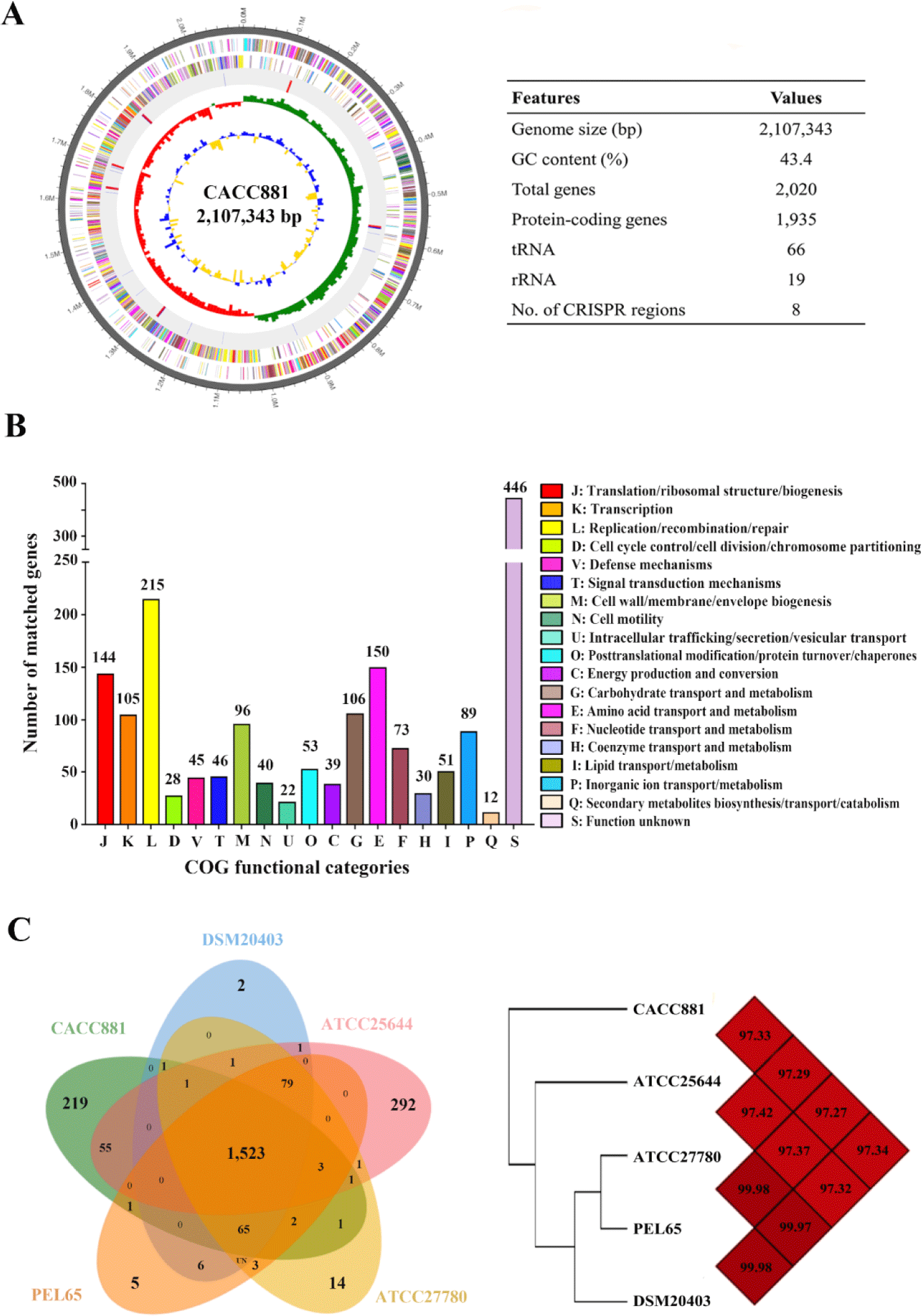
The complete genome of L. ruminis CACC881 comprised one circular chromosome (2,107,343 bp) with a GC content of 43.4%, 1,935 predicted CDSs, and 85 non-coding genes (19 rRNA and 66 tRNA genes) (Fig. 1A). In total, 1,790 CDSs (92.5%) were functionally classified into 19 COG categories (Fig. 1B). Most of the known protein-coding genes were associated with replication/recombination/repair (12.0%), amino acid transport and metabolism (8.4%), translation/ribosomal structure/biogenesis (8.0%), carbohydrate transport and metabolism (5.9%), and transcription (5.9%). Among the L. ruminis strains, the complete genome of CACC881 was most similar to that of strains DSM20403 (97.3%) and ATCC25644 (97.3%) (Fig. 1C). The pan-genomes of CACC881 and its related strains contained 2,480 POGs, of which 1,523 (61.4%) were core groups shared by all five strains. In total, 219 POGs (8.8%) were unique to the CACC881 strain, which included 60 genes encoding hypothetical proteins (Table 1). The most abundant COG categories in strain-specific orthologs were replication/recombination/repair (16.0%), cell wall/membrane/envelope biogenesis (5.0%), and transcription (4.6%). The genome of the strain CACC881 encoded eight clustered regularly interspaced short palindromic repeats (CRISPR)-related genes/proteins, two immunomodulatory-related genes (tagF and dltA) [6], two antioxidant genes (bcp and ahpC) [7], and genes related to the biosynthesis of vitamin B groups (ribT, ribF, frdA, ribU, ybjI, and cobC/phpB) [8]. Additionally, Class I bacteriocin-related genes were observed, including those related to the regulation of nisin biosynthesis (nisK), nisin immunity (nisI), and lanthipeptide biosynthesis (PSR47_00020) [9]. The findings indicate that the strain CACC881 contained genes related to probiotic characterization, such as tolerance to acid (clpB, queA, and grpE) and bile salts (cbh), and lactate synthesis (ldh) [10]. Notably, genes related to the regulation/immunity of bacteriocin (nisK and nisI) and peroxiredoxin (ahpC) were found only in the genome of strain CACC881, and not in the genomes of the other four L. ruminis strains (Table 2). These findings predict that L. ruminis CACC881 will play a role as potential probiotic including characterization as bacteriocin, biosynthesis of vitamin B group, antioxidant, and immunomodulatory abilities, and possible contributions to gut health and pathogen protection. The complete genome sequence of L. ruminis CACC881 may also contribute to the understanding of probiotic characterization and possible probiotic functions in animals.
jast-67-6-1427-g1
Fig. 1. Genomic features of Ligilactobacillus ruminis CACC881. (A) Circular genomic representation and features of L. ruminis CACC881. (B) Functional gene number of clusters of orthologous groups (COGs) categories. (C) Heatmap of orthologous average nucleotide identity (OrthoANI) and Venn diagram analysis of the genomes of five L. ruminis strains.
Download Original Figure
Table 1. Core and strain-specific gene clusters of five Ligilactobacillus ruminis strains
COG categories Core POGs CACC881-specific POGs
Unassigned 53 49
J 144 5
K 105 10
L 215 35
D 28 3
V 45 8
T 46 3
M 96 11
N 40 0
U 22 0
O 53 5
C 39 1
G 106 0
E 150 8
F 73 2
H 30 2
I 51 3
P 89 8
Q 12 6
S 446 60

COG, Clusters of Orthologous Groups; POG, pan-genome orthologous group; J, translation, ribosomal structure, and biogenesis; K, transcription; L, replication, recombination, and repair; D, cell cycle control, cell division, and chromosome partitioning; V, defense mechanisms; T, signal transduction mechanisms; M, cell wall/membrane/envelope biogenesis; N, cell motility; U, intracellular trafficking, secretion, and vesicular transport; O, posttranslational modification, protein turnover, chaperones; C, energy production and conversion; G, carbohydrate transport and metabolism; E, amino acid transport and metabolism; F, nucleotide transport and metabolism; H, coenzyme transport and metabolism; I, lipid transport and metabolism; P, inorganic ion transport and metabolism; Q, secondary metabolites biosynthesis, transport, and catabolism; S, function unknown.

Download Excel Table
Table 2. Predicted genes involved in the potential probiotic properties of Ligilactobacillus ruminis CACC881
Predicted function Gene Start End Length (bp)
CRISPR-associated
 Endoribonuclease Cas1 cas1 c1,059,228 c1,060,136 909
 Endonuclease Cas1 cas1 c1,089,938 c1,090,957 1,020
 Endonuclease Cas2 cas2 c1,058,923 c1,059,225 303
 Endoribonuclease Cas2 cas2 c1,089,635 c1,089,925 291
 Nuclease/helicase Cas3 cas3 c1,095,199 c1,097,655 2,457
 Endoribonuclease Cas6 cas6 c1,065,462 c1,066,229 768
 Protein Cas10/Csm1 cas10/csm1 c1,063,199 c1,065,481 2,283
 Type III-associated RAMP protein Csm3 csm3 c1,062,079 c1,062,747 669
Bacteriocin-related
 Lanthipeptides B (S8 family serine peptidase) PSR47_00020 2,678 7,891 5,214
 Regulation of nisin biosynthesis nisK c1,413,141 c1,414,505 1,365
 Immunity nisI c1,415,215 c1,416,030 816
Lactate synthesis
 L-lactate dehydrogenase ldh 1,736,388 1,737,359 972
ldh 1,765,253 1,766,170 918
ldh c1,995,134 c1,996,102 969
Acid tolerance
 Chaperone protein ClpB clpB c1,108,538 c1,111,144 2,607
 Chaperone protein GrpE grpE 939,031 939,609 579
 S-adenosylmethionine queA 604,283 605,326 1,044
Bile salt tolerance
 Choloylglycine hydrolase cbh 305,462 306,397 936
cbh 1,010,862 1,011,215 354
cbh c1,914,050 c1,915,024 975
Stress response or protection
 Chaperone protein DnaK dnaK 939,645 941,507 1,863
 Chaperone protein DnaJ dnaJ 941,609 942,745 1,137
 Triose-phosphate isomerase tpiA c1,343,674 c1,344,429 756
Biosynthesis of vitamin B groups
 Riboflavin biosynthesis ribT 819,421 819,801 381
 Succinate dehydrogenase flavoprotein subunit frdA c16,031 c16,888 858
 Riboflavin transporter RibU ribU 822,069 822,743 675
 FMN hydrolase ybjI 1,012,073 1,012,870 798
 Riboflavin kinase/FMN adenylyltransferase ribF c1,071,835 c1,072,794 369
 Cobalamin biosynthesis cobC/phpB 643,283 643,957 675
Key immunomodulatory molecule
 Teichoic acid biosynthesis tagF 255,008 256,024 1,017
 D-alanine--poly(phosphoribitol) ligase subunit 1 dltA 314,560 316,080 1,521
Antioxidant-associated tpx 565,480 565,974 495
 Thioredoxin-dependent peroxiredoxin bcp 238,172 238,660 489
 Peroxiredoxin ahpC c1,499,117 c1,499,680 324

CRISPR, clustered regularly interspaced short palindromic repeats.

Download Excel Table

NUCLEOTIDE SEQUENCE ACCESSION NUMBER

The complete genome sequence of L. ruminis CACC881 has been deposited in GenBank under the accession number CP117687. The BioProject and accession numbers are PRJNA932598 and SAMN33198791, respectively.

Competing interests

No potential conflict of interest relevant to this article was reported.

Funding sources

This research was funded by the Science and Technology Project Opens the Future of the Region (Project No. 1711177233), the Innopolis Foundation, and the Korea Institute of Planning and Evaluation for Technology in Food, Agriculture, Forestry (IPET) through the Agri-Food Export Enhancement Technology Development Program, funded by the Ministry of Agriculture, Food and Rural Affairs (MAFRA) (RS-2023-00234143), and partially supported by the support of Cooperative Research Program for Agriculture Science & Technology Development (Project No. PJ017026) Rural Development Administration, Korea.

Acknowledgements

Not applicable.

Availability of data and material

Upon reasonable request, the datasets of this study can be available from the corresponding author.

Authors’ contributions

Conceptualization: Kim Y.

Data curation: Park S, Park MA.

Formal analysis: Park S.

Methodology: Park S, Jang HJ.

Validation: Park S, Kim DH.

Investigation: Park S.

Writing - original draft: Park S.

Writing - review & editing: Park S, Park MA, Jang HJ, Kim DH, Kim Y.

Ethics approval and consent to participate

This article does not require IRB/IACUC approval because there are no human and animal participants.

REFERENCES

1.

Vieco-Saiz N, Belguesmia Y, Raspoet R, Auclair E, Gancel F, Kempf I, et al. Benefits and inputs from lactic acid bacteria and their bacteriocins as alternatives to antibiotic growth promoters during food-animal production. Front Microbiol. 2019; 10:57

2.

Oh YJ, Kim SA, Yang SH, Kim DH, Cheng YY, Kang JI, et al. Integrated genome-based assessment of safety and probiotic characteristics of Lactiplantibacillus plantarum PMO 08 isolated from kimchi. PLOS ONE. 2022; 17e0273986

3.

Yu X, Åvall-Jääskeläinen S, Koort J, Lindholm A, Rintahaka J, von Ossowski I, et al. A comparative characterization of different host-sourced Lactobacillus ruminis strains and their adhesive, inhibitory, and immunomodulating functions. Front Microbiol. 2017; 8:657

4.

Al Jassim RAM. Lactobacillus ruminis is a predominant lactic acid producing bacterium in the caecum and rectum of the pig. Lett Appl Microbiol. 2003; 37:213-7

5.

Park S, Kim JA, Jang HJ, Kim DH, Kim Y. Complete genome sequence of functional probiotic candidate Lactobacillus amylovorus CACC736. J Anim Sci Technol. 2023; 65:473-7

6.

LeBlanc JG, Laiño JE, Del Valle MJ, Vannini V, van Sinderen D, Taranto MP, et al. B‐Group vitamin production by lactic acid bacteria – current knowledge and potential applications. J Appl Microbiol. 2011; 111:1297-309

7.

Averina OV, Poluektova EU, Marsova MV, Danilenko VN. Biomarkers and utility of the antioxidant potential of probiotic Lactobacilli and Bifidobacteria as representatives of the human gut microbiota. Biomedicines. 2021; 9:1340

8.

Rodrigo-Torres L, Yépez A, Aznar R, Arahal DR. Genomic insights into five strains of Lactobacillus plantarum with biotechnological potential isolated from chicha, a traditional maize-based fermented beverage from Northwestern Argentina. Front Microbiol. 2019; 10:2232

9.

van Staden ADP, van Zyl WF, Trindade M, Dicks LMT, Smith C. Therapeutic application of lantibiotics and other lanthipeptides: old and new findings. Appl Environ Microbiol. 2021; 87:e00186-21

10.

Wang G, Yu H, Feng X, Tang H, Xiong Z, Xia Y, et al. Specific bile salt hydrolase genes in Lactobacillus plantarum AR113 and relationship with bile salt resistance. LWT-Food Sci Technol. 2021; 145:111208