Journal of Animal Science and Technology
Korean Society of Animal Sciences and Technology
RESEARCH ARTICLE

Complete genome sequence of Enterococcus faecium strain AJ_C_05 with potential characteristics to break down carbohydrates, applicable to livestock industry

Yejin Choi1,#https://orcid.org/0000-0002-7434-299X, Hyunok Doo1,#https://orcid.org/0000-0003-4329-4128, Jinok Kwak1,#https://orcid.org/0000-0003-1217-3569, Juyoun Kang1https://orcid.org/0000-0002-3974-2832, Eun Sol Kim2https://orcid.org/0000-0001-8801-421X, Gi Beom Keum1https://orcid.org/0000-0001-6006-9577, Sumin Ryu1https://orcid.org/0000-0002-1569-3394, Haram Kim1https://orcid.org/0009-0002-7504-5249, Yeongjae Chae1https://orcid.org/0009-0004-5573-1465, Sheena Kim1https://orcid.org/0000-0002-5410-1347, Hyeun Bum Kim1,*https://orcid.org/0000-0003-1366-6090, Ju-Hoon Lee3,4,5,*https://orcid.org/0000-0003-0405-7621
1Department of Animal Biotechnology, Dankook University, Cheonan, Korea
2Division of Infectious Diseases, Department of Pediatrics, University of North Carolina at Chapel Hill, Chapel Hill, NC, USA
3Department of Food Animal Biotechnology, Seoul National University, Seoul, Korea
4Department of Agricultural Biotechnology, Seoul National University, Seoul, Korea
5Center for Food and Bioconvergence, Seoul National University, Seoul, Korea
*Corresponding author: Hyeun Bum Kim, E-mail: hbkim@dankook.ac.kr
*Corresponding author: Ju-Hoon Lee, E-mail: juhlee@snu.ac.kr

These authors contributed equally to this work.

© Copyright 2026 Korean Society of Animal Science and Technology. This is an Open-Access article distributed under the terms of the Creative Commons Attribution Non-Commercial License (http://creativecommons.org/licenses/by-nc/4.0/) which permits unrestricted non-commercial use, distribution, and reproduction in any medium, provided the original work is properly cited.

Received: Apr 25, 2024; Revised: Jul 26, 2024; Accepted: Aug 20, 2024

Published Online: May 31, 2026

Abstract

Enterococcus faecium strain AJ_C_05 was isolated from a Deonjang, a traditional Korean fermented food made from soybeans, and its complete genome was sequenced using the Oxford MinION platform. The complete genome of E. faecium strain AJ_C_05 has one circular chromosome and two plasmids. The chromosome of E. faecium strain AJ_C_05 consists of 2,623,546 base pairs (bp) with a guanine + cytosine (G+C) content of 38.3%, 2,680 coding sequences, 69 tRNAs, and 18 rRNAs. One plasmid is 164,853 bp long and has a G+C content of 35.5%, and the other plasmid is 11,235 bp long with G+C content of 33.1%. E. faecium strain AJ_C_05 possesses genes for enzyme determinants, such as alpha-galactosidase (EC 3.2.1.22), beta-glucosidase (EC 3.2.1.21), cellulases (EC 3.2.1.4), chitinase (EC 3.2.1.122), proteases (EC 3.4.21.112), and xylanase (EC 3.2.1.8). These characteristics of E. faecium strain AJ_C_05 appears to indicate its potential to be used as probiotic feed additives.

Keywords: Whole genome sequencing; Enterococcus faecium; Feed additive

Enterococcus faecium (E. faecium) is recognized for its biological properties, which include the ability to inhibit harmful bacteria, good adhesion to the intestinal mucosa, and resistance to bile salts, stomach acid, and heat [1]. Because of these properties, it is widely used as probiotics for humans and animals. Previous studies have shown that adding E. faecium as a probiotics to weaning piglet feed improved growth and feed conversion [2]. Enterococcus is dominant microbiota of Doenjang, a traditional Korean fermented food made from soybeans [3].

In this study, we isolated E. faecium strain AJ_C_05 from a homemade soybean paste, Doenjang, collected from a local market in Cheonan-si, Chungcheongnam-do, Republic of Korea. E. faecium strain AJ_C_05 was aerobically cultured in Enterococcosel broth (MBcell) at 37°C for 24 hours. The genomic DNA of the AJ_C_05 strain was extracted using the TaKaRa MiniBEST Bacterial Genomic DNA Extraction Kit Ver. 3.0 (TaKaRa) following the manufacturer’s instructions. The complete genome of E. faecium AJ_C_05 was sequenced using the Oxford Nanopore Technologies MinION platform. Briefly, a library was prepared using an Oxford Nanopore Ligation Sequencing Kit (SQK-LSK109) (Oxford Nanopore), and the sequencing process was performed on a MinION sequencing device equipped with a MinION flow cell (R9.4.1) (Oxford Nanopore). A total of 322,486,606 base pairs (bp) with 91,650 reads were obtained, and genome assembly was performed de novo using the Canu assembler (v. 1.8) and Flye assembler (v. 2.9.2) with ‘nano-corr’ options. The Homopolish polisher (v. 0.4.1) was utilized to correct errors in the assembled draft genome. Quality Assessment Tool for Genome Assemblies (QUAST) (v. 5.0.2) and Benchmarking Universal Single-Copy Orthologs (BUSCO) (v. 5.4.6) were used to quantitatively evaluate the completeness of the genome assembly. For genome functional annotation, the Rapid Annotation using Subsystem Technology (RAST) (v. 2.0) and EggNOG-mapper (v. 2.0) were utilized [4,5]. In addition, ResFinder (v.4.4.0) and BLASTn method with the Virulence Factor Database (VFDB) were used to identify antibiotic resistance genes and virulence factors, respectively.

The E. faecium strain AJ_C_05 consists of the one circular chromosome and two plasmids. The chromosome genome comprises 2,623,546 bp with a guanine + cytosine (G+C) content of 38.3%, 2,680 coding sequences, 69 tRNAs, and 18 rRNAs. One plasmid is 164,853 bp long with a G+C content of 35.5% and the other is 11,235 bp long with a G+C content of 33.1% (Table 1, Fig. 1A). We compared the whole genome of E. faecium strain AJ_C_05 with that of E. faecium T110 (NCBI accession number: PRJNA207757), a strain known for its probiotic properties isolated from human microbiome in Japan [6]. E. faecium T110 has a chromosome size of 2,693,877 bp, a G+C content of 38.4%, and 2,639 protein-coding genes. The two strains have similar chromosome size, G+C content, and protein-coding genes, and an ANI value of 97.80%, indicating a high degree of similarity. Excluding an ‘unknown function’, the most COGs categories of E. faecium AJ_C_05 were ‘carbohydrate transport and metabolism [G]’, ‘Transcription [K]’, ‘Replication, recombination and repair [L]’, ‘Translation, ribosomal structure and biogenesis [J]’, ‘Amino acid transport and metabolism [E]’ and ‘Cell wall/membrane/envelope biogenesis [M]’ (Fig. 1B).
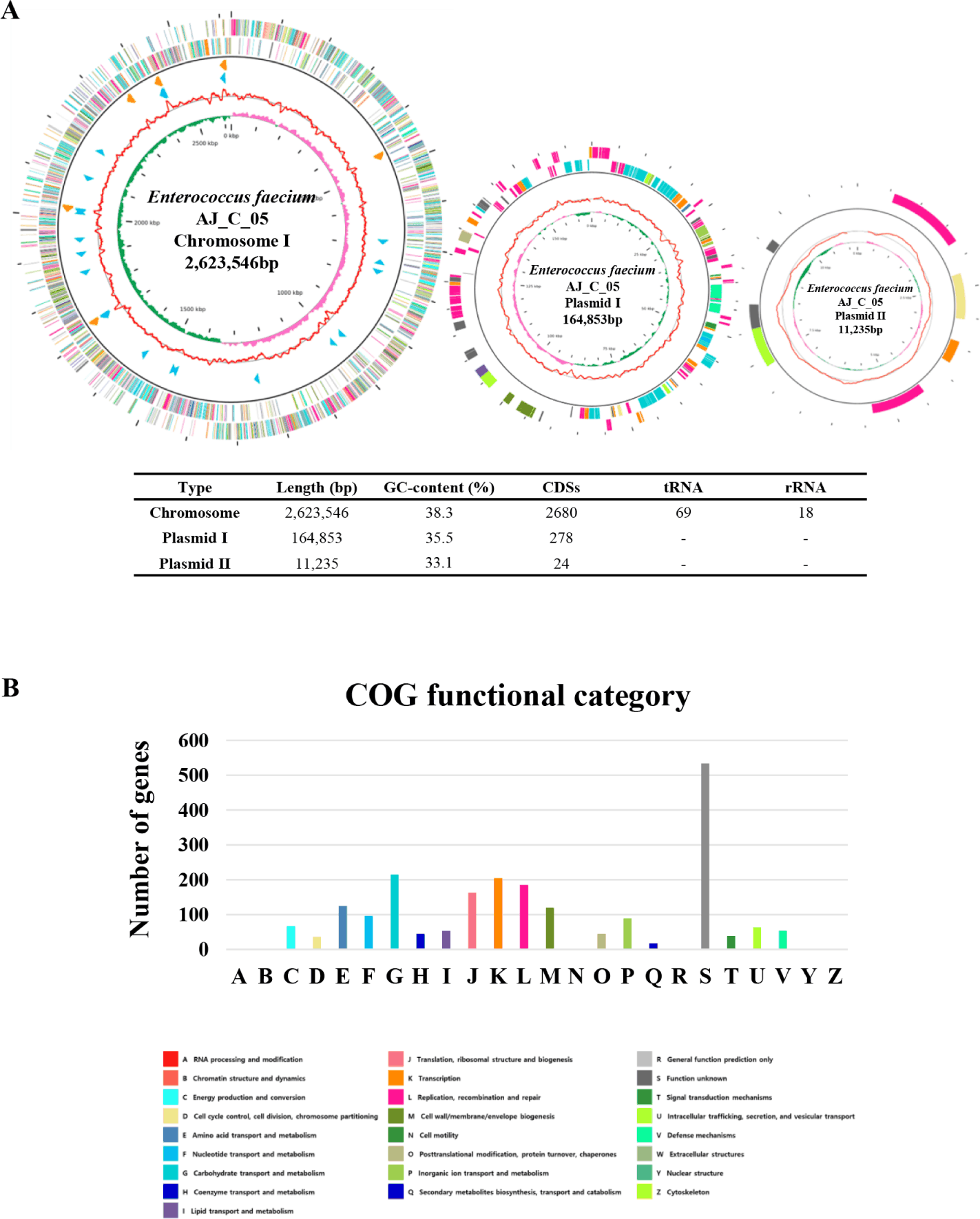
Table 1. Genome features of Enterococcus faecium strain AJ_C_05
Property Term
Chromosome Plasmid1 Plasmid2
Contig length (bp) 2,623,546 164,853 11,235
Guanine + cytosine (%) 38.3 35.5 33.1
Protein-coding genes 2680 278 24
tRNA genes 69 - -
rRNA genes 18 - -
Genbank accession No. CP138459.1 CP138458.1 CP138460.1
Download Excel Table
jast-68-3-954-g1
Fig. 1. Genome map of Enterococcus faecium strain AJ_C_05 and the functional categorization of predicted protein coding genes. The exterior circle delineates the locations of all identified gene coding sequences (ORFs), while the inner circle, highlighted in red, showcases the guanine + cytosine (GC) content. Variations in pink and green represent the GC skew. The representations of rRNA and tRNA operons are marked with orange and sky-blue arrows, correspondingly. The color-coded ORFs are aligned with their Clusters of Orthologous Groups (COG) designations as shown in Fig. 1A. The COG functional classifications of the anticipated protein coding genes are illustrated in Fig. 1B. bp, base pairs; CDS, coding sequences.
Download Original Figure

E. faecium strain AJ_C_05 possesses genes for enzyme determinants, such as cellulases (EC 3.2.1.4), proteases (EC 3.4.21.112), and xylanase (EC 3.2.1.8). Xylanase is an enzyme that specifically targets xylans, which are key carbohydrate components in the cell walls of grains [7]. Cellulase can hydrolyze non-starch polysaccharides (NSP) and destroy cell walls [8]. Protease contributes to reducing nitrogen emissions into the environment by optimizing protein utilization [9]. In addition, E. faecium strain AJ_C_05 contains the genes for enzymes such as beta-glucosidase (EC 3.2.1.21), chitinase (EC 3.2.1.122), and alpha-galactosidase (EC 3.2.1.22) that can break down carbohydrates.

The complete genome for E. faecium strain AJ_C_05 reveals that the antibiotic resistance gene aac (6’)-Ii is located on the chromosome. However, its transfer to other bacteria is hindered because of its presence on the chromosome. The pilF, encoding PilA-type pilus structure, was detected on the plasmid I. Despite being identified as a virulence factor, it may also contribute to bacterial colonization on cell surface structures, potentially benefiting probiotic gut colonization [10]. The characteristics of E. faecium strain AJ_C_05 suggests its potential for use as probiotic feed additives. This study provides valuable insights into the functionality of the newly observed E. faecium strain AJ_C_05 isolated from Doenjang, which has the potential to aid digestion when used as a bacterial feed additive for livestock.

NUCLEOTIDE SEQUENCE ACCESSION NUMBER

The complete genome sequences of Enterococcus faecium strain AJ_C_05 was deposited in GenBank under the accession numbers CP138458.1, CP138459.1, and CP138460.1. The BioSample accession number is SAMN38194472, and BioProject accession number is PRJNA1037610.

Competing interests

No potential conflict of interest relevant to this article was reported.

Funding sources

This research was supported by a grant (22193MFDS538 & RS-2024-00332462) from Ministry of Food and Drug Safety in 2024 and the National Research Foundation of Korea (NRF) grant funded by the Korea government (MSIT) (RS-2026-25486696).

Acknowledgements

Not applicable.

Availability of data and material

Upon reasonable request, the datasets of this study can be available from the corresponding author.

Authors’ contributions

Conceptualization: Choi Y, Doo H, Kim HB, Lee JH.

Data curation: Kim ES, Keum GB, Kim S.

Formal analysis: Choi Y, Doo H, Kang J, Kim ES, Ryu S, Kim H, Chae Y.

Methodology: Kwak J, Keum GB, Ryu S.

Validation: Kwak J, Kim ES, Kang J, Kim S.

Writing - original draft: Choi Y, Doo H, Kwak J.

Writing - review & editing: Choi Y, Doo H, Kwak J, Kang J, Kim ES, Keum GB, Ryu S, Kim H, Chae Y, Kim S, Kim HB, Lee JH.

Ethics approval and consent to participate

This article does not require IRB/IACUC approval because there are no human and animal participants.

Declaration of generative AI

No AI tools were used in this article.

REFERENCES

1.

Kopit LM, Kim EB, Siezen RJ, Harris LJ, Marco ML. Safety of the surrogate microorganism Enterococcus faecium NRRL B-2354 for use in thermal process validation. Appl Environ Microbiol. 2014; 80:1899-909

2.

Kim H, Chae Y, Cho JH, Song M, Kwak J, Doo H, et al. Understanding the diversity and roles of the canine gut microbiome. J Anim Sci Biotechnol. 2025; 16:95

3.

Jeong DW, Kim HR, Jung G, Han S, Kim CT, Lee JH. Bacterial community migration in the ripening of doenjang, a traditional Korean fermented soybean food. J Microbiol Biotechnol. 2014; 24:648-60

4.

Aziz RK, Bartels D, Best AA, DeJongh M, Disz T, Edwards RA, et al. The RAST Server: rapid annotations using subsystems technology. BMC Genomics. 2008; 9:75

5.

Cantalapiedra CP, Hernández-Plaza A, Letunic I, Bork P, Huerta-Cepas J. eggNOG-mapper v2: functional annotation, orthology assignments, and domain prediction at the metagenomic scale. Mol Biol Evol. 2021; 38:5825-9

6.

Natarajan P, Parani M. First complete genome sequence of a probiotic Enterococcus faecium strain T-110 and its comparative genome analysis with pathogenic and non-pathogenic Enterococcus faecium genomes. J Genet Genomics. 2015; 42:43-6

7.

Keum GB, Pandey S, Kim ES, Doo H, Kwak J, Ryu S, et al. Understanding the diversity and roles of the ruminal microbiome. J Microbiol. 2024; 62:217-30

8.

Adeola O, Cowieson AJ. BOARD-INVITED REVIEW: opportunities and challenges in using exogenous enzymes to improve nonruminant animal production. J Anim Sci. 2011; 89:3189-218

9.

Pan L, Zhao PF, Yang ZY, Long SF, Wang HL, Tian QY, et al. Effects of coated compound proteases on apparent total tract digestibility of nutrients and apparent ileal digestibility of amino acids for pigs. Asian-Australas J Anim Sci. 2016; 29:1761-7

10.

Li B, Zhan M, Evivie SE, Jin D, Zhao L, Chowdhury S, et al. Evaluating the safety of potential probiotic Enterococcus durans KLDS6.0930 using whole genome sequencing and oral toxicity study. Front Microbiol. 2018; 9:1943