

The genus Enterococcus ranks as the third largest lactic acid bacteria (LAB) group, following Lactobacillus and Streptococcus [1]. Certain strains of Enterococcus faecium, when used as probiotics, have been shown to contribute to immunomodulation within the intestinal mucosa and to aid in the development of the digestive system. It is widely employed in the livestock industry as a substitute feed additive to enhance animal growth, particularly in pig and poultry farming [1–3]. E. faecium strain GB_C_05 was isolated from Sikhye, a traditional Korean rice beverage, obtained from a local market in Cheonan, Korea. E. faecium GB_C_05 was cultured in Enterococcosel (MBcell) broth at 37°C for 24 hours. The genomic DNA of E. faecium GB_C_05 was extracted from the cell pellet obtained from a 24-hour culture using the G-spinTM Genomic DNA Extraction Kit (for Bacteria; Invitrogen). The concentration of the extracted DNA was determined using the QubitTM dsDNA HS Assay Kit (Invitrogen). Libraries were constructed using the Ligation Sequencing Kit V14 (Oxford Nanopore Technologies) according to the manufacturer’s instructions. The purified library was loaded into a MinION flow cell (R10.4.1; Oxford Nanopore Technologies) and sequenced for 22 hours using a MinION sequencer (Oxford Nanopore Technologies). Oxford Nanopore sequencing produced 128,994 long reads, for a total of 375,852,265 base pairs. The extracted raw data was demultiplexed, and the adapters were trimmed using Porechop (version 0.2.4), followed by read quality adjustment using Chopper (version 0.7.0) [4]. Assembly was performed using Canu (version 1.8) and Flye (version 2.9.2) tools, and errors occurring in nanopore sequencing data were identified and corrected through Homopolish polisher (version 0.4.1) [4,5]. Evaluation of the assembled genome was conducted using Quality Assessment Tool for Genome Assemblies (QUAST; version 5.0.2) and Benchmarking Universal Single-Copy Orthologs (BUSCO; version 5.4.6) [6,7]. The web-based annotation tools RAST (version 2.0) and EggNOG-mapper (version 2.0) were used to analyze the data and identify key genes and metabolic pathways [8,9]. Virulence and antibiotic resistance genes were identified using Virulence Factor Database (VFDB) and ResFinder (version 4.4.0) [10,11]. Bacteriocin genes were explored using the Bagel 4 web software [10].
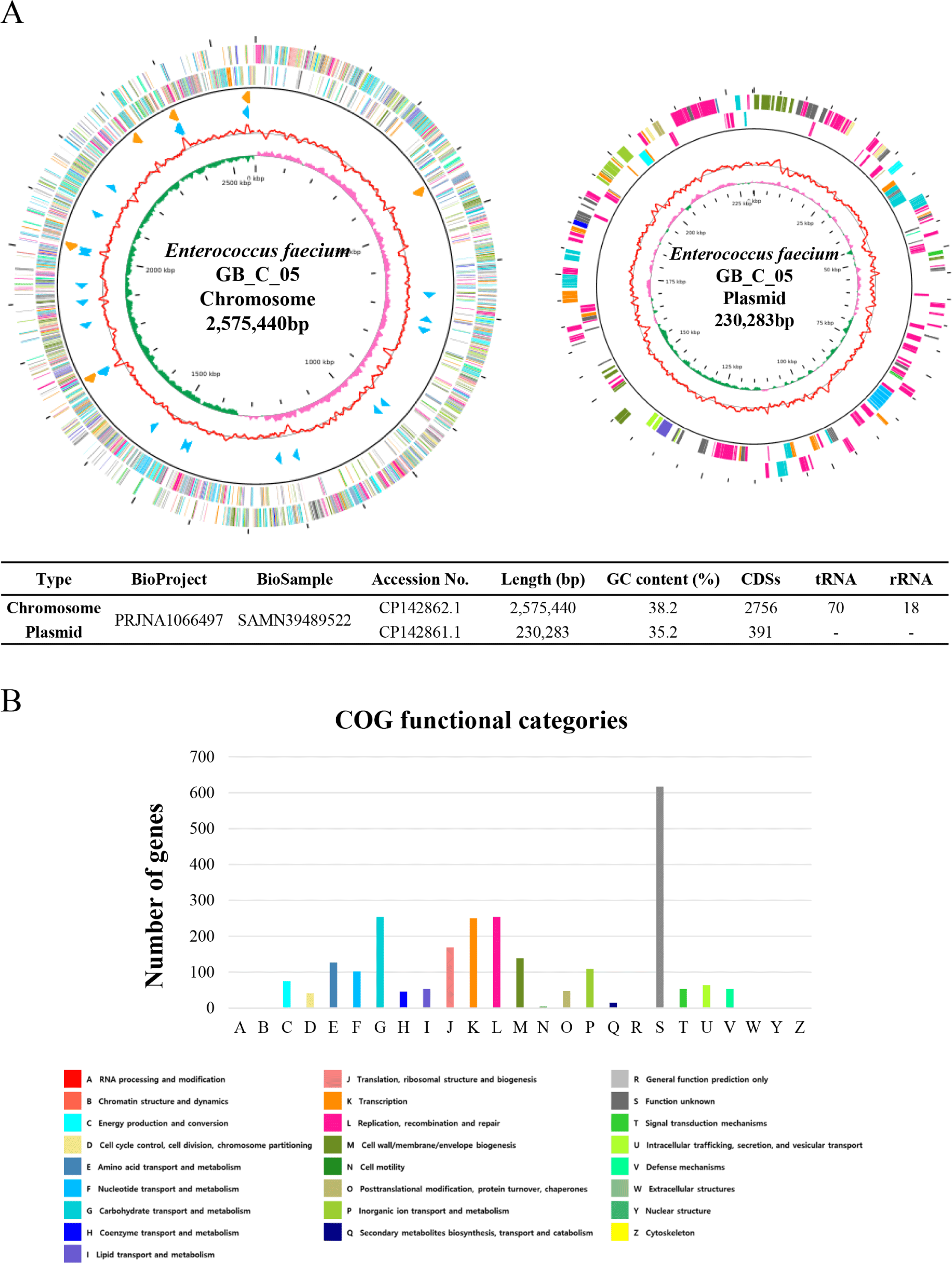
The chromosome of E. faecium strain GB_C_05 comprises 2,575,440 bp with a GC content of 38.2%, and contains 2,756 predicted protein-coding sequences, along with 18 rRNA genes and 70 tRNA genes. In addition, a circular plasmid, 230,283 bp in length and with a GC content of 35.2%, was identified separately from the chromosome. Additionally, the plasmid contained 391 CDSs, with no tRNA or rRNA genes identified. The most abundant COG categories, excluding ‘Unknown function [S]’, were ‘Carbohydrate transport and metabolism [G]’ (254 genes, 10.28%) and ‘Replication, recombination, and repair [L]’ (254 genes, 10.28%), comprising a total of 20.56%. This was followed by ‘Transcription [K]’ (250 genes, 10.11%). The genome map and COG functional classification of E. faecium GB_C_05 are shown in Figs. 1A and 1B. Genes encoding enzymes essential for carbohydrate transport and metabolism, such as α-galactosidase (EC 3.2.1.22), β-glucosidase (EC 3.2.1.21), and α-L-arabinofuranosidase (EC 3.2.1.55), were identified. This genetic composition suggests the potential for efficient carbohydrate utilization and energy extraction from various carbohydrate substrates. Genes related to carbohydrate metabolism may help improve feed digestibility and enhance livestock productivity, providing a crucial competitive advantage in the livestock industry [3]. The genome of E. faecium strain GB_C_05 contains bacteriocin gene clusters encoding bacteriocin-like inhibitors, including Enterocin A, Listeriocine 743A, Enterocin P, Enterocin SE-K4 and Enterolysin A. Enterocin, produced by Enterococcus, is a small antibacterial peptide known to exhibit broad-spectrum inhibitory activity against spoilage bacteria and foodborne pathogens [1]. Among them, the structural peptide of Enterocin P was predicted to contain an N-terminal signal sequence, suggesting the possibility of extracellular secretion and functional activity. Although signal peptides were not detected in the remaining candidates, their localization within organized operon-like gene clusters, which include structural, immunity, and transporter components, may still imply potential antimicrobial functions. These features are consistent with previously reported enterococcal bacteriocin operons and suggest that these gene clusters may encode functionally active bacteriocins, although further experimental validation is required to confirm their phenotypic expression (Table 1) [1]. The genes associated with probiotic features, such as bacteriocin production, acid and bile salt tolerance, epithelial cell adhesion, and stress response, are detailed in Table 2.
In the complete genome of E. faecium strain GB_C_05, the species-specific antibiotic resistance genes aac(6’)-Ii and msr(C) were detected on the chromosome rather than on a plasmid, suggesting a low likelihood of their transmission to other microorganisms [11]. In the VFDB results, a total of 15 genes associated with virulence factors were identified in the chromosome. It contains genes acm, sagA, sgrA, and pilB, which are adherence-related genes and are involved in biofilm formation, and these genes are commonly found in Enterococcus. The presence of these genes may confer advantages to the strain by facilitating effective gut colonization, enhancing adhesion to the intestinal epithelium, and providing protection against harmful bacteria [10]. Notably, key virulence determinants such as gelatinase (gelE), cytolysin (cyl), and vancomycin resistance genes (vanA, vanB) were not detected. While experimental validation is necessary, the absence of these major virulence markers may suggest a potential safety profile for E. faecium GB_C_05 as a probiotic candidate.
In summary, although experimental validation is needed to confirm the phenotypic expression of genes encoding enzymes essential for carbohydrate transport and metabolism, such as α-galactosidase, their presence suggests the potential for supporting beneficial microbial activity and contributing to carbohydrate metabolism. Such functional traits may help enhance the nutritional value of livestock products and support the strain’s possible application as a feed additive. Therefore, the whole genome analysis of E. faecium GB_C_05 is expected to unlock various application possibilities in the livestock industry and the field of feed additives.


