

INTRODUCTION
Molasses, a by-product of sugar production from crops such as sugarcane, is widely used as an energy source and primarily as a palatability enhancer in livestock feed due to its high content of sucrose, glucose, fructose, and minerals [1]. However, a recent decrease in the production of molasses combined with its increasing global demand and disruptions in transportation through the Panama and Suez Canals have led to a continuous rise in raw material costs, thereby exacerbating the economic burden associated with its use as a feed additive [2].
In response to rising costs and the unstable global supply of molasses, increasing attention has been given to monosodium glutamate–condensed molasses soluble (MSG-CMS), a fermentation derived by-product that is generally more affordable due to its stable local availability, lower processing requirements, and minimal competition with other industrial uses [3]. MSG-CMS is a secondary by-product obtained during monosodium glutamate (MSG) production via microbial fermentation, in which molasses serves as the primary carbon source [4]. During fermentation, microorganisms consume sugars from molasses, producing glutamic acid and other amino acids concentrated in CMS [5]. In addition to these economic and availability benefits, CMS contains glutamic acid and other amino acids derived from fermentation, which support palatability and nutritional value in swine diets [2,6]. Furthermore, it provides approximately 32% crude protein (CP) and essential minerals (including potassium, chloride, and sulfur), further enhancing its value as a feed ingredient for livestock [7]. Given these nutritional characteristics, several studies have recently evaluated the efficacy of MSG-CMS in animal diets [5,8], including its potential role as a palatability enhancer. Previous studies have shown that dietary inclusion of MSG-CMS can improve feed intake (FI) and average daily gain (ADG) in growing-finishing pigs [2], and that replacing 2% molasses with CMS does not compromise growth performance while increasing backfat thickness [7]. These findings suggest that CMS may serve as an effective palatability enhancer like molasses.
However, previous studies have primarily focused on growth performance, leaving critical factors such as nutrient utilization, blood profiles, fecal microbial, and cost-effectiveness relatively unexplored, although these factors are all key aspects that must be addressed to comprehensively evaluate MSG-CMS in pig diets. Therefore, this study aimed to determine the optimal substitution rate of molasses with MSG-CMS in growing-finishing pig feed by evaluating its effects on growth performance, nutrient digestibility, blood profiles, fecal microbiota, and economic efficiency.
MATERIALS AND METHODS
Molasses was sugarcane-derived syrup provided by NongHyup Feed and used as an energy and palatability source. MSG-CMS was a condensed liquid co-product from the monosodium glutamate production process, also provided by NongHyup Feed. Both ingredients were top-dressed and thoroughly mixed with the basal diet before feeding.
A total of 100 crossbred pigs ([Landrace × Yorkshire] × Duroc) with an initial body weight (BW) of 23.17 ± 3.51 kg at 9 weeks of age were used for 14 weeks. The pigs were randomly assigned to five dietary treatments with four replicates per treatment and five pigs per replicate. The experimental treatments included: 1) PC (basal diet with 2% molasses); 2) NC (basal diet); 3) T1 (basal diet with 1.5% molasses and 0.5% MSG-CMS); 4) T2 (basal diet with 1% molasses and 1% MSG-CMS); and 5) T3 (basal diet with 2% MSG-CMS).
The experimental period was divided into two phases: a growing phase (0–6 weeks) and a finishing phase (6–14 weeks) according to the nutrient requirements suggested by NRC [9]. MSG-CMS was incorporated into the diets based on the molasses replacement ratio designated for each treatment group (Table 1). Throughout the entire experimental period, pigs had ad libitum access to feed and water.
DDGS, dried distiller’s grains with solubles; MDCP, monodicalcium phosphate; CP, crude protein; NE, net energy; Ca, calcium; P, phosphorus.
Provided per kilogram of complete diet: vitamin A, 11025 U; vitamin D3, 1103 U; vitamin E, 44 U; vitamin K, 4.4 mg; riboflavin, 8.3 mg; niacin, 50 mg; thiamine, 4 mg; d-pantothenic, 29 mg; choline, 166 mg; and vitamin B12, 33 µg; Cu (as CuSO4 · 5H2O), 12 mg; Zn (as ZnSO4), 85 mg; Mn (as MnO2), 8 mg; I (as KI), 0.28 mg; and selenium (as Na2SeO3 · 5H2O), 0.15 mg.
BW was measured at the beginning of the experiment and subsequently at 3, 6, 10, and 14 weeks (end of the trial). FI was calculated by subtracting the remaining feed from the amount provided at each BW measurement interval. ADG was determined by dividing the BW difference during each period by the number of days in that period. Feed efficiency was calculated as the ratio of ADG to average daily feed intake (ADFI).
To evaluate nutrient digestibility, 0.2% chromium oxide (Cr₂O₃) was added to the experimental diets as an indigestible marker at 6, 10, and 14 weeks. Fresh fecal samples were collected using the rectal massage method. Diet samples containing chromium oxide were also collected and stored at –20°C alongside fecal samples until further analysis. Before analysis, fecal samples were dried in an oven at 60°C for 72 h and subsequently ground using a Wiley mill. The general nutrient composition and chromium concentrations of diets and feces were analyzed according to AOAC [10] procedures. Gross energy content was determined using an adiabatic bomb calorimeter (Model 6400, Parr Instrument). Nutrient digestibility was calculated using the following equation:
At 6, 10, and 14 weeks, blood samples were collected from the jugular vein of four pigs per treatment using 5 mL syringes. Blood samples (2 mL) were collected into K₃EDTA vacuum tubes, and 3 mL samples were collected into serum separator tubes. Serum samples were centrifuged at 983×g for 15 min at 4°C. White blood cells (WBC), red blood cells (RBC), lymphocytes, neutrophils, eosinophils, and monocytes were analyzed using an automatic hematology analyzer (ADVIA 120, Bayer). Total protein (TP) was analyzed using the colorimetric method, and blood urea nitrogen (BUN) was analyzed using the urease-glutamate dehydrogenase (GLDH) method. After analysis, TP and BUN values were measured using an automatic chemistry analyzer (Cobas C720, Hoffmann-La Roche).
Fecal samples were collected from one pig per pen in each treatment at 6, 10, and 14 weeks using the rectal massage method. After collection, samples were immediately transported to the laboratory, suspended in sterile saline solution, and homogenized. The samples were serially diluted from 10−3 to 10−7 and used for microbial enumeration. Harmful bacteria, Escherichia coli, were cultured using MacConkey agar, while beneficial bacteria, Lactobacillus, were cultured using Difco MRS agar. Both types of agar media used for the analyses were purchased from KisanBio. The diluted samples were spread onto each agar medium and incubated at 37°C for 24 h for E. coli and 48 h for Lactobacillus. Microbial counts were determined and subsequently converted to logarithmic values (Log CFU/g) for statistical analysis.
The economic efficiency of replacing molasses with MSG-CMS in growing-finishing pig diets was performed based on feed costs without considering other associated expenses during the experimental period. Feed cost per kilogram of weight gain was calculated using ingredient costs, total weight gain (TWG), and total feed intake (TFI).
A total of five crossbred pigs ([Landrace × Yorkshire] × Duroc) with an initial BW of 36.84 ± 0.51 kg at 11 weeks of age were used for 5 weeks in a 5 × 5 Latin square design experiment. The treatments were identical to those described in Experiment 1. Pigs were individually and randomly housed in metabolism cages (1.2 × 0.7 m).
Experimental diets were formulated and provided as described in Experiment 1. Daily feed allowance was adjusted to 2.7 times the maintenance energy requirement for growing pigs (2.7 × 110 kcal × BW kg0.75). The daily feeding allowance was divided into two equal portions and fed twice daily at 08:00 and 17:00 h. Water was available ad libitum.
Apparent total tract digestibility (ATTD) was determined by the total collection method. After an adaptation period of 5 days, pigs were fed experimental diets containing 0.4% chromium oxide (Cr₂O₃) as an indigestible marker. Total feces and urine were collected from the appearance of the marker for the following 3 days. Urine was collected daily into a container with 50 mL of 6 mol/L HCl placed under each metabolism cage to fix nitrogen. Collected feces and urine were weighed and stored at –20°C until analysis. Before analysis, fecal samples were dried in an oven at 60°C for 72 h and subsequently ground using a Wiley mill. The chemical composition of the diets and feces was analyzed following AOAC [10] methods, and gross energy was determined using an adiabatic bomb calorimeter (Model 6400, Parr Instrument).
The ATTD of nutrients and nitrogen retention were calculated using the following equations:
All data in this study were analyzed utilizing JMP (JMP® Pro version 16.0.0, SAS Institute). A one-way analysis of variance (ANOVA) was conducted to evaluate differences among treatment groups, and the significance of treatment means was determined using Tukey’s multiple range test to assess differences among treatment groups, with significance set at p < 0.05. A tendency was considered when 0.05 ≤ p < 0.10. Data are presented as means with their corresponding SE.
RESULTS
The effects of replacing molasses with different ratios of MSG-CMS in growing-finishing pig diets on growth performance are presented in Table 2. During the 0–6 weeks, the T1 showed significantly higher (p < 0.05) ADG and G:F than the T3. Additionally, the T3 exhibited significantly less (p < 0.05) ADFI than the PC. During 10–14 weeks and 6–14 weeks, the T1 showed significantly higher (p < 0.05) ADFI than the NC. Throughout the entire experimental period, the T1 and the T2 showed significantly higher (p < 0.05) ADFI than the NC, but no significant differences were observed when compared with the PC.
The effects of replacing molasses with different ratios of MSG-CMS in growing-finishing pig diets on nutrient digestibility are presented in Table 3. There were no significant differences in DM, CP, and GE digestibility among treatments during the experimental periods.
The effects of replacing molasses with different ratios of MSG-CMS in growing-finishing pig diets on blood profiles are presented in Table 4. There were no significant differences in blood profiles (WBC, RBC, neutrophils, lymphocytes, eosinophils, monocytes, total protein, and BUN) among treatments during the experimental periods.
The effects of replacing molasses with different ratios of MSG-CMS in growing-finishing pig diets on fecal microbial counts are presented in Table 5. There were no significant differences in fecal E. coli and Lactobacillus counts that were observed among treatments during the experimental periods.
The effects of replacing molasses with different ratios of MSG-CMS in growing-finishing pig diets on economic efficiency are presented in Table 6. During weeks 0–6, the T1 showed significantly higher (p < 0.05) TWG than the NC and the T3. TFI was significantly lower (p < 0.05) in the T3 than the PC. The T1 exhibited significantly lower (p < 0.05) feed cost per kg gain than both the PC and the T3. During the weeks 6–14, the T1 and the PC showed significantly higher (p < 0.05) TFI than the NC. Throughout the entire experimental period, the T1 and T2 showed significantly higher (p < 0.05) TFI than the NC.
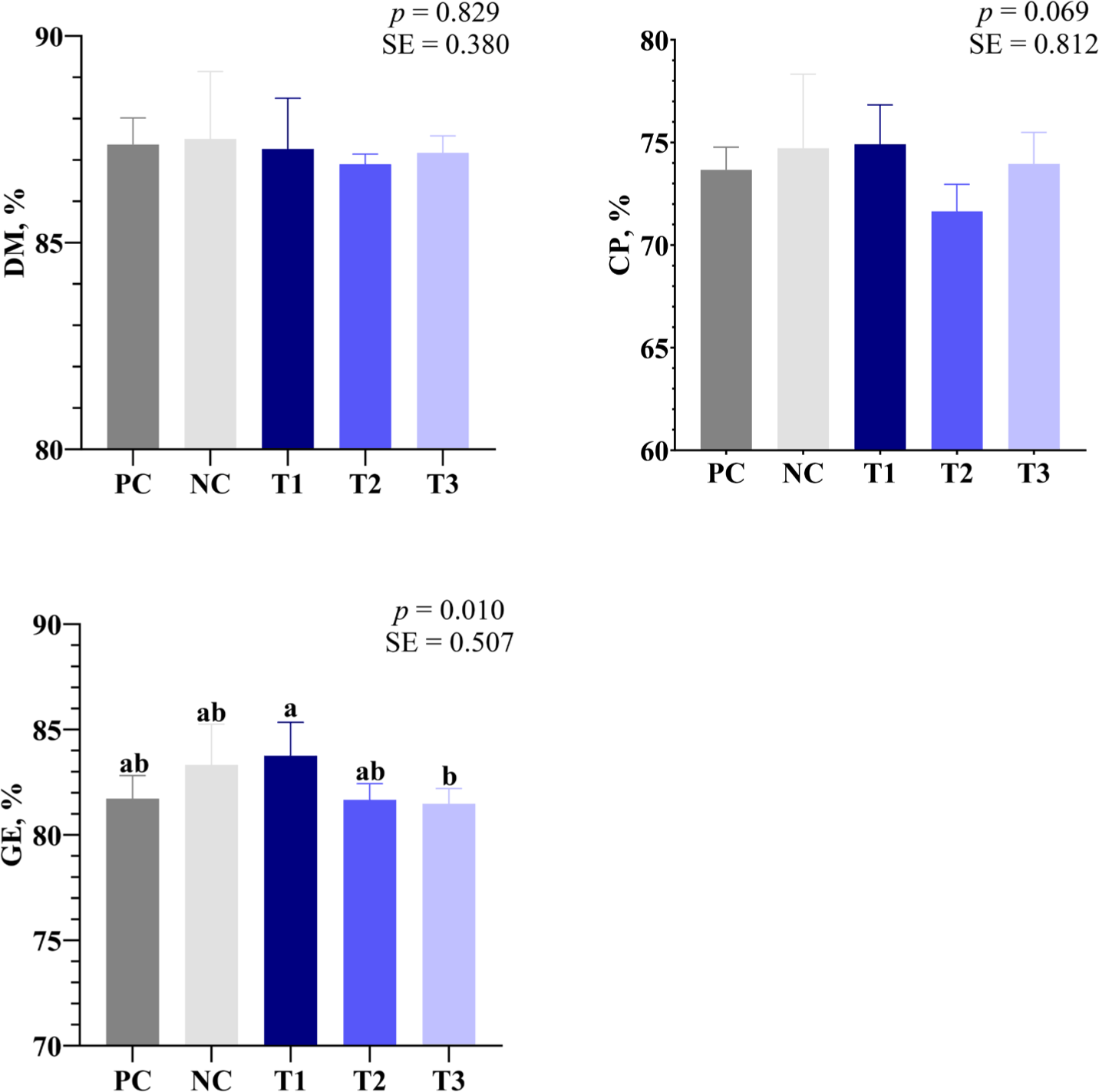
The effects of replacing molasses with different ratios of MSG-CMS in growing-finishing pig diets on nutrient digestibility are presented in Fig. 1. The T1 tended to have higher CP digestibility than the T2 (p = 0.069). While GE digestibility was significantly higher (p < 0.05) in the T1 than the T3.
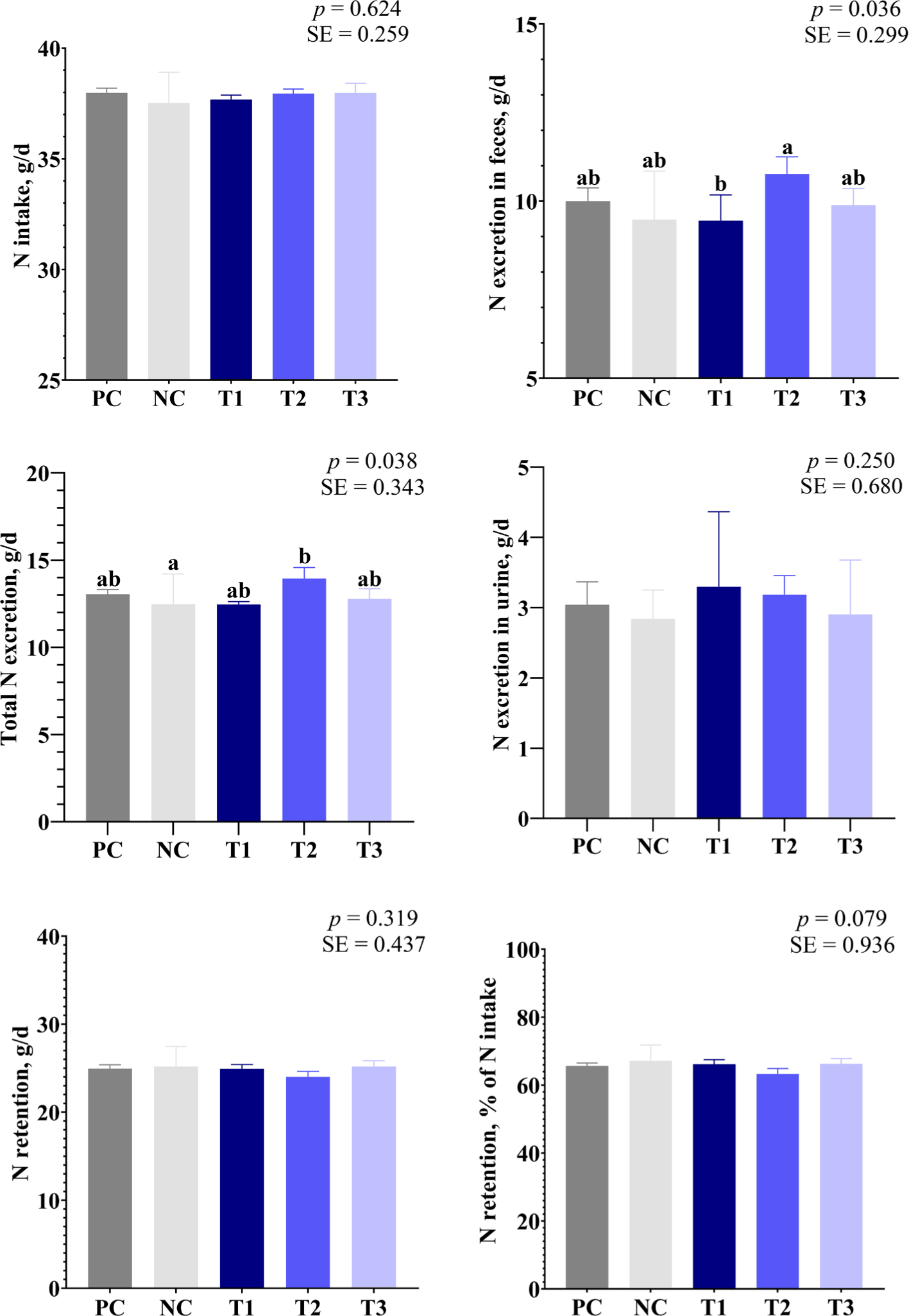
The effects of replacing molasses with different ratios of MSG-CMS in growing-finishing pig diets on nitrogen retention are shown in Fig. 2. Fecal nitrogen excretion was significantly lower (p < 0.05) in the T1 than in the T2. Total nitrogen excretion was significantly higher (p < 0.05) in the T2 than in the NC. Nitrogen retention relative to nitrogen intake tended to be higher in the T1 and T3 than in the T2 (p = 0.079).
DISCUSSION
In comparison to other conventional CMS, MSG-CMS contains relatively lower levels of crude protein, essential amino acids, and minerals [2,6,11]. Nevertheless, its high digestibility and appropriate moisture content enhance its manageability and applicability in feed formulation, highlighting its potential as a valuable ingredient in animal nutrition [12]. However, potential limitations associated with its excessive inclusion, particularly its impact on feed palatability and intake, must also be considered.
Excessive use of flavor additives, such as MSG-CMS, disrupts the overall flavor profile of feed, reduces its palatability and ultimately decreases feed intake [13–15]. In the present study, the treatment in which molasses was completely replaced with MSG-CMS significantly reduced ADFI, ADG, and G:F during 0–6 weeks. The observed decrease was due to reduced feed palatability caused by excessive inclusion of MSG-CMS [15,16]. However, no significant differences were observed during 6–14 weeks. This result suggests that the negative effects of MSG-CMS were reduced over time as pigs adapted to the flavor [17]. In contrast, partial replacement of molasses with 0.5% MSG-CMS showed no adverse effects on growth performance, indicating its potential as an appropriate inclusion level. This is because amino acids and nitrogenous compounds in CMS, which originated from microbial fermentation, improved protein synthesis and maintained nutrient balance [6]. Overall, these findings are consistent with previous research indicating that determining an appropriate inclusion level is critical for the practical application of MSG-CMS as a functional feed ingredient [18–20].
In this study, there were no significant differences in the digestibility of DM (85%–88%), CP (67%–72%), and GE (77%–82%) among treatments, which is attributed to the low inclusion level of MSG-CMS [6]. These results suggest that MSG-CMS, when included at an appropriate level, does not impair nutrient digestibility and can be safely used as a feed ingredient in pig diets. This is consistent with previous study showing that appropriate inclusion of molasses by-products does not impair nutrient digestibility in pigs [21,22]. Similarly, Stemme et al. [3] also reported similar digestibility values for organic matter (72.3%) and crude protein (71.8%) when CMS was included at 16% in pig diets. However, when CMS was included at levels over 43%, CP digestibility decreased by more than 10% [3].
BUN and total protein levels were evaluated as indicators of protein utilization and overall metabolic status, as they can indirectly reflect nitrogen retention and liver protein synthesis [23,24]. In this study, blood profiles such as WBC, RBC, total protein, and BUN showed no significant differences among treatments. These results indicate that MSG-CMS did not negatively affect metabolic health, which is consistent with previous studies reporting that MSG had no adverse effects on blood profiles related to metabolism [25–27]. Therefore, MSG-CMS can be considered metabolically safe and nutritionally acceptable when used at appropriate levels [28,29].
Fecal microbiota are dynamic biomarkers affected by large intestinal fermentation, environmental factors, and dietary components such as soluble carbohydrates and organic acid compounds [30,31]. They are closely associated with nutrient digestibility, immune function, and animal productivity [32,33]. Lactobacillus is a beneficial microbe that can enhance gut health and nutrient absorption, whereas excessive E. coli impairs intestinal function, making their balance a key indicator of intestinal microbial status [34]. In this study, no significant differences in fecal microbial composition were observed among treatments. This result is likely attributed to the relatively low substitution level of MSG-CMS [35,36]. Therefore, while this finding suggests that MSG-CMS at low inclusion levels does not negatively impact the microbial balance in feces, further studies are needed to evaluate its effects at higher substitution levels.
MSG-CMS, a secondary by-product of MSG production, is more affordable and requires less processing than other fermentation-derived additives such as yeast extract or Lactobacillus products [37]. This economic advantage enhances its practicality as a feed additive in commercial pig diets [38]. In the present study, pigs fed MSG-CMS diets showed a tendency toward improved feed cost efficiency without a negative effect on FI, aligning with its economic potential. This result indicates its potential as a cost-effective additive for pig diets [39]. Similarly, Park et al. [40] reported that partial replacement of high-cost protein sources such as spray dried porcine plasma with hydrolyzed proteins significantly reduced feed costs without negatively affecting growth performance in pigs, suggesting that low-cost alternatives like MSG-CMS may offer comparable economic benefits. Shahini et al. [41] have emphasized that feed cost reduction is a key strategy for improving farm profitability, especially under rising input prices. This perspective supports the economic applicability of MSG-CMS as a low-cost additive in swine production.
Metabolic trials offer controlled conditions with limited animal movement, which contribute to reduced variability and enable accurate measurement of nutrient digestibility and metabolism [42,43]. Under controlled conditions, reduced GE digestibility was only observed when MSG-CMS completely replaced molasses. MSG-CMS contains significantly lower levels of monosaccharides such as sucrose and glucose than molasses [44]. This is because it is a by-product of MSG production that undergoes different processing steps known to reduce the content of monosaccharides [4]. Monosaccharides are rapidly absorbed in the small intestine and directly utilized as an immediate energy source [45,46]. Therefore, a reduction in monosaccharide intake, as observed in complete MSG-CMS replacement, reduces the supply of absorbable energy in the intestinal tract [47]. Consequently, it impairs the development of the intestinal tract and reduces the synthesis or activity of digestive enzymes over time, ultimately decreasing GE digestibility [48]. Accordingly, maintaining an appropriate inclusion level of MSG-CMS is considered important to support optimal digestive function.
MSG-CMS is not regarded as a primary protein source but contains amino acids and nitrogenous compounds derived from microbial fermentation, which can contribute to nitrogen utilization in pig diets [34]. However, previous studies have reported that CMS supplementation reduces nitrogen digestibility and increase nitrogen excretion, depending on the inclusion level and diet composition [49]. In the present study, nitrogen excretion tended to decrease in the T1 group, which contained a lower level of MSG-CMS in combination with molasses, whereas this effect was not observed in T2 and T3, where MSG-CMS was included at higher levels. This suggests that moderate supplementation of MSG-CMS, when combined with fermentable carbohydrates such as molasses, may be more effective in improving nitrogen metabolism. Molasses provides fermentable carbohydrates, including non-starch polysaccharides, that serve as energy sources for intestinal microbes and epithelial cells [50,51], and enhance microbial fermentation in the large intestine [52]. These microbial activities can support microbial protein synthesis and nitrogen retention, thereby contributing to improved nitrogen utilization [53]. In contrast, high inclusion levels of MSG-CMS have adverse effects on nitrogen balance due to limited digestibility or metabolic burden [54]. Taken together, these findings indicate that a balanced combination of fermentable carbohydrates and nitrogenous compounds is critical for optimizing nitrogen utilization. Further studies are needed to determine the optimal inclusion levels of MSG-CMS and to clarify the underlying mechanisms involved.
CONCLUSION
This study supports the feasibility of partially replacing molasses with MSG-CMS in growing-finishing pig diets. Specifically, a 25% replacement of molasses with MSG-CMS improved ADG, G:F, GE digestibility, and economic efficiency without negative impacts on blood profiles or fecal microbiota. Future studies should explore higher inclusion rates or extended feeding durations to clarify physiological and microbial responses to MSG-CMS.


