

INTRODUCTION
Meat is an essential nutritional source because of its high protein content, essential fatty acids, and various minerals [1]. However, these high-quality nutrients in meat also provide a suitable environment for microbial growth, which leads to spoilage and quality deterioration [2]. Furthermore, pathogenic bacteria such as Escherichia coli O157:H7 and Staphylococcus aureus can easily grow in meat and meat products and cause food poisoning [3,4]. Microbial growth should be controlled to ensure the safety and quality of meat products [5]. Thus, preservatives that inhibit various microbial growth and extend the shelf life of the meat products are essential [6].
Potassium sorbate is a synthetically produced food additive commonly used as a preservative in meat products at concentrations below 2,000 ppm. Sorbate has several advantages, including low cost, antibacterial effects, minimal impact on flavor and taste, and is classified as “Generally Recognized as Safe” (GRAS) by the Food and Drug Administration (FDA) [5,7]. However, there is a growing misconception by consumers that synthetically manufactured preservatives can be harmful to their health, leading to them avoiding such products. Previous surveys identified preservatives as the most concerning food additives because of their perceived negative health impacts [1]. Therefore, the demand for natural substances that can substitute synthetic additives is increasing.
Chitosan and chestnut shells are natural substances widely recognized for their antimicrobial properties. Chitosan, derived from chitin in crustaceans and fungi, is a linear deacetylated polymer of beta-(1,4)-acetyl D-glucosamine [8]. Some studies have reported that chitosan can inhibit the growth of gram-negative bacteria more than gram-positive bacteria [9,10]. According to Chung et al. [11], gram-negative bacteria have more negatively charged cell surfaces, and therefore, have greater interactions with chitosan. However, this effect varies depending on factors such as the molecular weight of chitosan, environmental pH in the presence of chitosan, individual microbial structure, and storage time [12,13]. Chitosan and nano-chitosan (chitosan processed into nano-sized) can be used as substitutes for potassium sorbate in cheese owing to their antimicrobial effects [6]. Although several studies have suggested that chitosan exhibits antimicrobial effects in meat products, it is primarily used as an edible food packaging material and coating rather than as an additive, such as a sorbate substitute [14,15].
Chestnut inner shells, which are mostly discarded, constitutes 50% of the total chestnut shell and contains significant amounts of tannins [16]. Tannins, a type of polyphenol, exert antimicrobial effects on various microorganisms [17–19]. According to Silva et al. [20], the inner shell extract of the European chestnut (Castanea sativa) exhibits high antimicrobial activity against gram-positive bacteria, including S. aureus, Staphylococcus epidermidis, and Enterococcus faecalis, whereas it shows low antimicrobial activity against gram-negative bacteria, including E. coli and Salmonella Enteritidis. However, to date, no studies have investigated the use of chitosan and chestnut shell, either individually or in combination, as sorbate replacements in meat products.
Therefore, we hypothesized that the combined use of chitosan and chestnut shell, which is more effective against gram-negative and gram-positive bacteria, respectively, would enhance microbial inactivation, thereby extending the shelf life of meat products. Thus, the aim of this study was to evaluate the effects of individual or combined use of chitosan and chestnut shells on the microbial safety and quality pork meat batter as alternatives to sorbate during storage.
MATERIALS AND METHODS
Potassium sorbate (98%) and chestnut inner shell powder were purchased from DAEJUNG, and Theyeondu, respectively. Low-molecular-weight chitosan (with a weight range of 50,000–190,000 Da, a deacetylation range of 75%–85%, and a viscosity range of 20–300 cP) was purchased from Sigma-Aldrich.
Pork meat and pork back fat were purchased from a local commercial market. Both lean meat and back fat were stored at 4°C for 24 h after purchase. Formulations of five different meat batters are listed in Table 1. All meat batter samples were prepared using lean meat (480 g), back fat (240 g), ice water (or 1% acetic acid solution, 240 mL), salt (14.4 g), phosphate (1.92 g), and L-ascorbic acid (0.48 g). Meat batter was prepared described by br Sembring and Chin [21]. The lean meat was homogenized in a blender for 20 s and mixed with ice water. Salt and phosphate were added and mixed for 1 min, and then back fat was added and mixed for 3 min. After adding L-ascorbic acid and mixing, the other additives were added and mixed for 2 min. The control sample was prepared without further additives, and the other treatments were prepared with four different additives: sorbate (2,000 ppm), chitosan (1%), chestnut shell (1%), and a combination of chitosan (0.5%) and chestnut shell (0.5%). In this study, chitosan was dissolved in 1% acetic acid solution because it only dissolves in cationic form under acidic conditions [6]. To adjust the water content added in the meat batter, 1% acetic acid solution (ice) was added instead of ice water.
For microbial analysis, a portion of the meat batter was placed in a sterilized polyethylene bag. For quality analysis, the other portion of the meat batter was vacuum packaged, cooked in a circulating water bath (MCB-3011D, MONO-TECH) at 80°C for 30 min, cooled in ice water, and packaged in polyethylene bags. All samples were stored at 4°C for 1 and 7 days.
E. coli O157:H7 (NCCP 15739, gram-negative bacteria) and S. aureus (DSM 346, gram-positive bacteria) were used in this study. Each E. coli O157:H7 and S. aureus was inoculated into 25 mL tryptic soy broth (TSB; MB cell) and cultured at 37°C for 24 h using a shaking incubator at 120 rpm. Subsequently, each broth was centrifuged (1580R, LABOGENE) at 4,000×g for 20 min and washed twice with 0.85% sterile saline. The final bacterial concentration was approximately 8–9 Log CFU/mL. Each resulting bacterial suspension (100 µL) was inoculated on the prepared meat batter (10 g), respectively.
To assess the hygiene indicator bacteria (total aerobic bacteria, E. coli and coliform) and spoilage bacteria (Pseudomonas spp. and lactic acid bacteria), meat batter (10 g) was blended with sterile saline using a stomacher (Digital Power Embossing LS-400, BNF KOREA) for 2 min. Each blended sample was serially diluted in sterile saline and inoculated on the appropriate media. Total aerobic bacteria were determined using plate count agar (MB Cell) and plates, incubated at 32°C for 3 days. Coliform and E. coli were determined using Eosin-methylene blue (MB Cell) agar plates, incubated at 37°C for 24 h. Lactic acid bacteria were enumerated using overlaid pour plates of De Man–Rogosa–Sharpe (MB Cell) agar, incubated at 30°C for 3 days. Pseudomonas spp. counts were determined using Pseudomonas agar base (MB Cell) supplemented with Cetrimide-Fucidin-Cephaloridine (C-F-C) and glycerol selective supplement (MB Cell), which were incubated at 25°C for 48 h. Microbial counts were expressed as log colony-forming units per gram (Log CFU/g).
The pathogen-inoculated meat batter was blended and diluted with sterile saline, and the diluted samples were inoculated and cultivated in the appropriate media. E. coli O157:H7 counts were determined using Eosin-methylene blue agar plates, incubated at 37°C for 24 h. S. aureus counts were determined using mannitol salt (MB Cell) agar with Egg Yolk (MB Cell) plates, incubated at 37°C for 24 h. Microbial counts are expressed as log colony-forming units per gram (Log CFU/g).
Each meat batter (3 g) was homogenized with 9 mL of distilled water and 50 µL of 2,6-di-tert-butyl-4-methylphenol (BHT; 7.2% in ethanol) at 16,000 rpm for 20 s (T25 digital, IKA-Werke). The homogenate (1 mL) was added to 2 mL of a thiobarbituric acid (TBA)/trichloroacetic acid (TCA) solution (20 mM TBA in 15% TCA). The mixture was then heated in a shaking circulating water bath at 90°C for 30 min to induce the development of a pink color. The mixture was cooled using ice water and subjected to centrifugation at 2,265×g for 10 min at 4°C. The absorbance of the supernatants was measured at 532 nm using a spectrophotometer (Varioskan Lux, Thermo Fisher Scientific). A standard curve was generated using 1,1,3,3-tetraethoxypropane, and the thiobarbituric acid reactive substances (TBARS) values were expressed as milligrams malondialdehyde (MDA) per kilogram for the meat batter.
The meat batter sample (1 g) was homogenized in distilled water (9 mL) at 16,000 rpm for 20 s (T10 Basic; IKA-Werke). The homogenate was centrifuged at 3,100×g for 10 min, and filtered through filter paper No. 4 (Whatman). The pH of the homogenates was measured using a pH meter (SevenEasy, Mettler-Toledo).
Meat batter samples (approximately 50 g) were vacuum packaged and cooked in the circulating water bath at 80°C for 30 min. After heating, the moisture in the sample was removed, and the sample was weighed. The cooking loss of the meat batter was calculated using the following formula;
All tests were conducted three times for each experimental condition. One-way analysis of variance (ANOVA) was performed using IBM® SPSS software (version 29; IBM) to analyze microbial analysis, TBARS values, cooking loss, and pH. Duncan’s multiple range test was used to determine the level of significance (p < 0.05). The results were reported as the mean ± SEM.
RESULTS AND DISCUSSION
Hygiene indicator bacteria (total aerobic bacteria, E. coli, and coliform) indirectly reflect sanitary conditions, fecal contamination, and the potential presence of pathogenic microorganisms. Although these bacteria do not cause foodborne illnesses, their presence often indicates a high likelihood of foodborne pathogens [22]. Table 2 shows that the total aerobic bacteria counts were the highest in the meat batter added with chestnut shell 1% (2.01 Log CFU/g), followed by the control (0.67 Log CFU/g) on storage day 1. In the meat batter added with sorbate, chitosan 1%, and chitosan 0.5% + chestnut shell 0.5%, there were no total aerobic bacteria detected on storage day 1. In addition, after 7 days of storage, no growth of total aerobic bacteria was detected in the meat batter added with chitosan 0.5% + chestnut shell 0.5%, which was significantly the lowest among the treatments (p < 0.05). There was no significant difference in the total aerobic bacteria between 1 and 7 days of storage in any of the treatments (p > 0.05). Total coliform and E. coli counts were not detected in any of the treatment groups during the storage period.
Pseudomonas spp. and lactic acid bacteria are the primary spoilage bacteria that proliferate in meat, potentially leading to meat deterioration as unpleasant odors and taste [23]. As shown in Table 3, Pseudomonas spp. were not detected in all treatments on storage day 1. After 7 days of storage, Pseudomonas spp. were also not detected in the meat batter containing chitosan 1% or chitosan 0.5% + chestnut shell 0.5%. Pseudomonas spp. counts in meat batter without an additive (control) and with sorbate or chestnut shell 1% were higher than 1 Log CFU/g, but no significant difference was found among any of the treatments after 7 days of storage. For lactic acid bacteria, no viable cells were detected in the meat batter added with chitosan 1% and chitosan 0.5% + chestnut shell 0.5% on storage days 1 and 7, respectively. The counts of lactic acid bacteria were the highest in the meat batter added with chestnut shell 1% on all storage days. Pseudomonas spp. and lactic acid bacteria counts did not significantly increase as the storage day increased (p > 0.05).
S. aureus (gram-positive bacteria) and E. coli O157:H7 (gram-negative bacteria) are common pathogens detected in meat products [3]. In Table 4, the counts of S. aureus were the lowest in meat batter added with chitosan 1%, and followed by chitosan 0.5% + chestnut shell 0.5% on storage days 1 and 7. Meanwhile, the meat batter added with chestnut shell 1% showed the highest S. aureus counts on all storage days (p < 0.05). The counts of E. coli O157:H7 were also the lowest in the meat batter added with chitosan 1% for all storage days. No significant difference was found in the E. coli O157:H7 counts between the meat batter without an additive (control) and with sorbate (p > 0.05). In all treatments, E. coli O157:H7 counts did not significantly increase with the storage period (p > 0.05).
Potassium sorbate inhibits microbial growth by undissociated sorbic acid penetrating cell membranes, acidifying the cytoplasm, and disrupting enzyme activity and energy metabolism [6,24]. Teng et al. [25] found that Gram-negative bacteria are generally more sensitive to potassium sorbate than gram-positive bacteria. The difference in cell wall structure between gram-positive and gram-negative bacteria is the primary reason for the difference in tolerance to potassium sorbate. This finding is consistent with the results presented in supplementary data. When potassium sorbate (2,000 ppm) was added to the microbial broth, it was more effective against gram-negative E. coli O157:H7 than against gram-positive S. aureus, with reductions of 5.43 and 1.28 Log CFU/mL, respectively (Table 5). However, the addition of the same sorbate to pork meat batter did not exhibit antimicrobial effects against total aerobic bacteria, Pseudomonas spp. (gram-positive), lactic acid bacteria, E. coli O157:H7, and S. aureus in this study. According to Lin et al. [24], the antimicrobial activity of potassium sorbate is highest in the undissociated state; thus, food with a pH close to neutral will exhibit reduced antimicrobial activity. Hwang and Huang [26] showed that the growth of pathogenic bacteria in meat salads was affected by salad pH and sorbate concentration. The bactericidal efficacy of the sorbate was maximal in acidic conditions (pH 4–5.6) [27]; however, pork meat batter made with sorbate showed a pH value around 6.0 (Table 6). This might be the reason why the microorganism counts in the sorbate-added meat batter were not significantly lower than those of the control in this study. Similar to our results, Hsu and Sun [28] also showed that the addition of potassium sorbate (2%) did not affect the total microbial and mold counts of emulsified meatballs.
| Pathogenic bacterium | Treatments1) | SEM2) | |||
|---|---|---|---|---|---|
| Control | Sorbate | Chitosan 1% | Chestnut shell 1% | ||
| Staphylococcus aureus | 11.65a | 10.37b | 6.84c | NDd | 0.08 |
| Escherichia coli O157:H7 | 12.09a | 6.66c | 10.65b | 7.06d | 0.55 |
We hypothesized that gram-negative bacteria would be more inactivated by chitosan in meat batter, because chitosan can inactivate microorganisms by neutralizing negative charges on the microbial surface, and the negative charge on the cell surface of gram-negative bacteria is higher than that on gram-positive bacteria [11,29]. When Georgantelis et al. [9] made sausages added with chitosan (10 g/kg), the counts of Enterobacteriaceae (gram-negative) were significantly lower than those of Pseudomonas (gram-positive). However, interestingly, the results of their study differed from our hypothesis. The addition of chitosan 1% to meat batter initially reduced S. aureus more effectively (3.73 Log CFU/g reduction) compared to E. coli O157:H7 (0.54 Log CFU/g reduction), but showed a greater reduction in E. coli O157:H7 (3.78 Log CFU/g reduction) than S. aureus (0.91 Log CFU/g reduction) after 7 days of storage. In other words, chitosan was more effective against gram-positive bacteria during the initial storage of meat batter, whereas it showed greater inhibition of gram-negative bacteria at later storage stages. As mentioned by Ardean et al. [12], over time, the antibacterial activity of chitosan is primarily attributed to its amino groups, which are directly influenced by its degree of deacetylation. Furthermore, intrinsic factors such as the degree of deacetylation and extrinsic factors, including pH and contact time, affect the antimicrobial efficacy of chitosan. For this reason, chitosan may exhibit different bactericidal effects depending on the storage period.
Phenolic compounds present in chestnut shells can inactivate microorganisms by affecting cell membranes and essential enzymes or by altering the functionality of genetic material [30]. In particular, tannins abundant in chestnut shells exhibit high antibacterial activity, penetrating the cell wall and disrupting cellular metabolism, ultimately leading to cell death [31]. In Table 5, the addition of chestnut shell 1% to microbial broth reduced the counts of S. aureus and E. coli O157:H7 by 11.65 Log CFU/mL and 5.03 Log CFU/mL, respectively; however, it was ineffective in reducing the counts of these bacteria when added to the meat batter. This result is consistent with that of a study by Lee et al. [17], who also reported that the application of chestnut inner shell extract to laboratory media was more effective against Campylobacter jejuni than its application to chicken meat. The problem was that the addition of chestnut shell 1% to meat batter not only showed no antimicrobial effect but also increased the counts of total aerobic bacteria, lactic acid bacteria, and S. aureus on 1 day of storage. Chestnut shells contain not only phenolic compounds but also high levels of various elements such as carbon, nitrogen, sulfur, and iron [32], and we assumed that these chemical compounds acted as nutrients, thereby contributing to microbial growth in meat batter. However, to determine the exact reason, for this, further studies are needed, including an analysis of the nutritional composition of chestnut shell.
Summarizing the microbial analysis results, the addition of chitosan 1% to meat batter showed the highest microbial inactivation effect across all bacterial species, followed by chitosan 0.5% + chestnut shell 0.5%, throughout the entire storage period.
TBARS values were calculated to determine lipid oxidation in meat batter added with different additives (Table 7). On all storage days, TBARS value was highest in the meat batter added with sorbate, whereas it was lowest in the meat batter added with chestnut shell 1% (p < 0.05). When chitosan 0.5% + chestnut shell 0.5% was added to the meat batter, TBARS value was significantly lower than that of the control and chitosan 1% addition throughout the storage period (p < 0.05). In meat batter made without additives (control) and with sorbate, TBARS values significantly increased with increasing storage time (p < 0.05). There were no significant differences in TBARS values during storage among meat batters added with chitosan 1%, chestnut shell 1%, and chitosan 0.5% + chestnut shell 0.5% (p > 0.05).
Control (No additives); Potassium sorbate 2,000 ppm; Low M.W. chitosan 1%; Chestnut shell powder 1%; Low M.W. chitosan 0.5% + Chestnut shell powder 0.5%.
Various studies have investigated the effects of potassium sorbate on lipid oxidation in meat products; however, their findings have been inconsistent [33]. The TBARS values of emulsified meatballs increased as the potassium sorbate content increased from 0% to 0.2% [28]. When chicken legs and breasts were dipped in a potassium sorbate solution (5%), the TBARS values were higher than those of the control [34]. These results correspond with this study. According to Springer and Ziegler [35], potassium sorbate showed significant pro-oxidant effects in the O/W emulsions tested. However, the oxidation processes of potassium sorbate are highly dependent on the matrix, so it can be differentiated individually for each product. Contrary to the findings of the present study, chilled beef ground with potassium sorbate 0.075 g/kg showed a lower TBARS value than the control [36]. Ground buffalo meat added with 0.3% potassium sorbate exhibited lower TBARS values than the control at 0 and 8 days of storage [37].
Free-radical chain reactions that lead to autoxidation are recognized as the primary lipid oxidation mechanism in meat products [38]. Therefore, the antioxidant properties of chestnut shells, such as total phenolic content and 2,2-diphenyl-1-picrylhydrazyl (DPPH) radical scavenging activity, can retard lipid oxidation in meat batters. Ham et al. [39] reported that chestnut shells extracted with an ethanol solution had high total phenolic content and DPPH radical scavenging activity, indicating their excellent antioxidant capacity. Joo and Choi [16] explained that pork patties with chestnut shell powder exhibited a significant (p < 0.05) increase in total phenolic content and DPPH radical scavenging activity as the amount of chestnut shell powder increased (0%, 1%, 3%, and 5%). Zamuz et al. [40] showed that the addition of chestnut shell extract to beef meat patties inhibits lipid oxidation and retard metmyoglobin formation. Echegaray [41] reviewed the utility of chestnuts and their by-products as sources of natural antioxidants in meat products.
The reported effects of chitosan on lipid oxidation in meat products have been inconsistent. Arslan and Soyer [42] found that treating the surfaces of dry-fermented sausages with a chitosan 1% solution resulted in the lowest TBARS values among the treatments. According to Hoa et al. [43], chitosan can inhibit lipid oxidation in meat through metal ion chelation, oxygen barrier formation, and antioxidant and antimicrobial activities; however, its effectiveness may vary depending on the fatty acid composition of the meat product, storage temperature, and oxygen concentration. Alirezalu et al. [44] showed that higher concentrations of chitosan prevented lipid oxidation in frankfurter-type sausages without nitrate.
For these reasons, lipid oxidation in meat batter was most effectively inhibited by the addition of chestnut shell 1%, followed by the combination of chitosan 0.5% and chestnut shell 0.5%.
As shown in Table 6, the pH values of the meat batter displayed the following order during the storage period: chestnut shell 1% = control > chitosan 0.5% + chestnut shell 0.5% > sorbate = chitosan 1% (p < 0.05). No significant differences were observed among storage days in all treatments (p < 0.05). In Fig. 1, cooking loss values were lower in the following order: chestnut shell 1% < control < chitosan 0.5% + chestnut shell 0.5% = sorbate < chitosan 1%.
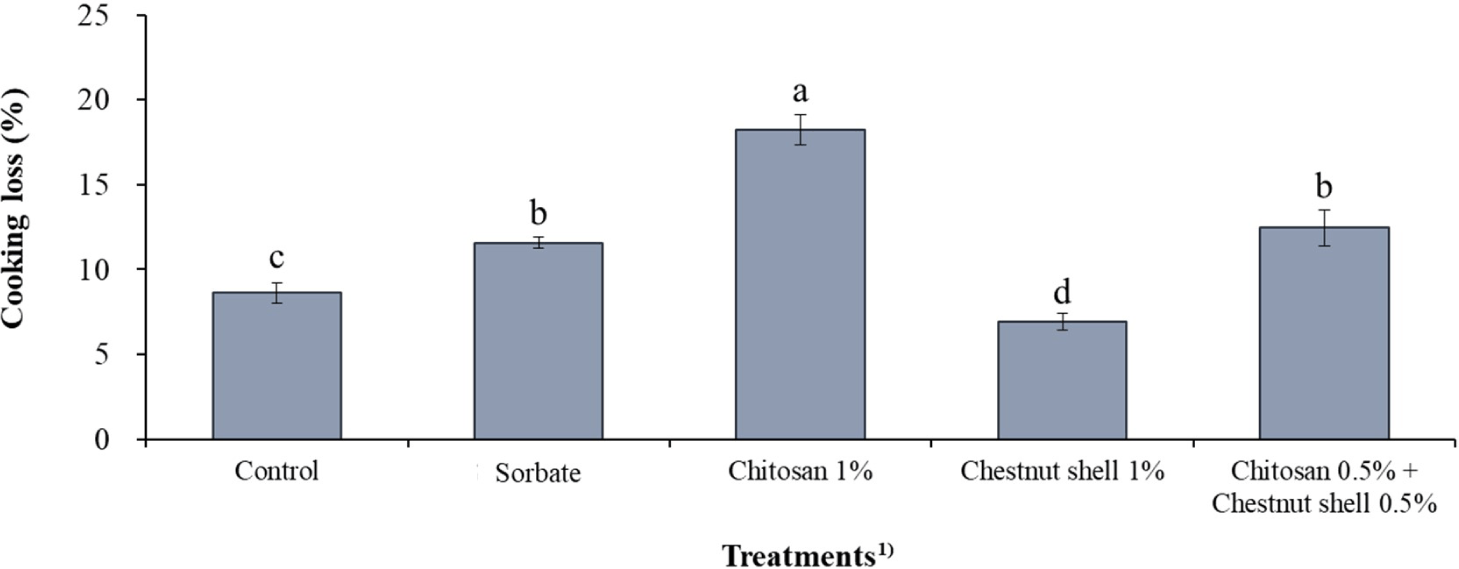
Generally, when the pH of meat and meat products is above the isoelectric point (pH 5.0–5.2), pH increases result in higher water-holding capacity and lower cooking loss [45]. As shown in Table 6 and Fig. 1, the order of increasing pH among the meat batter treatments corresponds to the order of decreasing cooking loss.
The effects of potassium sorbate on pH and cooking loss of meat products have been reported to vary inconsistently among studies [46]. No effect was observed on the pH values of chicken leg and breast meat dipped in potassium sorbate solution (5%) [34]. Ground buffalo meat treated with 0.3% potassium sorbate showed a higher pH value and water-holding capacity, whereas a lower cooking loss value compared to the control on the storage day 1 [37]. The addition of potassium sorbate (2%) did not affect the cooking yield of emulsified meatballs [28].
In this study, chitosan 1% was dissolved in acetic acid and added to the meat batter, because chitosan only dissolves in the cationic form under acidic conditions. The reason why the meat batter with chitosan 1% added had the lowest pH is expected to be due to the use of acetic acid. Shaltout et al. [47] also dissolved chitosan in acetic acid 1% and mixed it with beef; the pH decreased as the amount of added chitosan increased.
Similar to this study, Joo and Choi [16] reported that the addition of chestnut shell powder to pork patties did not affect pH values. The addition of chestnut (Castanea sativa Mill.) peel powder 1% did not significantly affect the pH of chicken emulsion sausage compared to the control [48]. Although the addition of chestnut shell did not affect the pH of the meat batter, the observed reduction in cooking loss might be attributable to the dietary fiber contained in the chestnut shell. Choi et al. [48] reported that the cooking loss of meat products depends on the composition of ingredients. In particular, the inclusion of dietary fiber substantially enhances water-holding capacity due to its high moisture retention ability. Similar to this study, cooking loss of chicken meat batters decreased as the amount of chestnut peel powder increased (0%–4%) [48]. Joo and Choi [16] also reported that increasing the concentration of chestnut shells reduced cooking loss.
CONCLUSIONS
In this study, the microbial reduction in meat batter was highest with the addition of chitosan 1%, followed by 0.5% + chestnut shell 0.5%. In contrast, lipid oxidation was most effectively inhibited by treatment with chestnut shell 1%, followed by chitosan 0.5% + chestnut shell 0.5%. Cooking loss was reduced by the meat batter added with chitosan 1%, followed by chitosan 0.5% + chestnut shell 0.5%. Overall, the combination of chitosan, which improves microbiological safety and cooking loss, and chestnut shells, which inhibits lipid oxidation, is recommended for meat batter. Consequently, the combined addition of chitosan 0.5% and chestnut shell 0.5% to meat batter can serve as an alternative to potassium sorbate for extending shelf life. However, further studies are required to verify these effects in other meat products and to assess additional quality changes for industrial applications.


