Journal of Animal Science and Technology
Korean Society of Animal Sciences and Technology
RESEARCH ARTICLE

Exploring the potential of salivary small RNAs as non-invasive biomarkers in pigs

Ga-Hyeon Jeong1https://orcid.org/0009-0000-9640-5931, Kyu-Sang Lim1,2,*https://orcid.org/0000-0001-5406-266X
1Department of Animal Resources Science, Kongju National University, Yesan 32439, Korea
2Resources Science Research Institute, Kongju National University, Yesan 32439, Korea
*Corresponding author: Kyu-Sang Lim, Department of Animal Resources Science, Kongju National University, Yesan 32439, Korea., Tel: +82-41-330-1242, E-mail: kyusang@kongju.ac.kr

© Copyright 2025 Korean Society of Animal Science and Technology. This is an Open-Access article distributed under the terms of the Creative Commons Attribution Non-Commercial License (http://creativecommons.org/licenses/by-nc/4.0/) which permits unrestricted non-commercial use, distribution, and reproduction in any medium, provided the original work is properly cited.

Received: Dec 11, 2024; Revised: Feb 05, 2025; Accepted: Feb 07, 2025

Published Online: Nov 30, 2025

Abstract

Saliva, a non-invasive potential source of circulating microRNAs (miRNAs) and microbiomes, is not well described in pigs. Salivary miRNA expression profiles and the functional significance in pigs were investigated in this study. Saliva samples were extracted from adult female pigs, and small RNA sequencing revealed 26 known and 223 novel miRNAs. The large number of novel miRNAs also demonstrates the differences between salivary miRNAs in pigs and other biological samples. Functional analysis of miRNA target genes indicated enrichments in molecular functions related to transcription regulator activity, cytoskeleton organization, and protein binding, suggesting roles for this interaction in gene expression and physiological control. Moreover, metagenomic analysis revealed microbial sequences representing around 39% of the total reads, with Corynebacterium genus, an important member of the oral microbiota, being the most prevalent. Combining miRNA with microbiome data indicates that porcine saliva is rich in molecular information that will be useful for salivary health monitoring and microbiome studies. This study underscores the potential of salivary miRNAs as biomarkers for physiological processes and microbiome interactions in pigs, paving the way for further research into their diagnostic and monitoring applications.

Keywords: Pig; Saliva; Transcriptome; MicroRNA; Microbiome; Non-invasive biomarker

INTRODUCTION

MicroRNAs (miRNAs) are small non-coding RNAs with a length of 22 nucleotides [1]. They regulate the transcription and post-transcription of gene expression by mRNA degradation or translational repression depending on the binding to the 3’ untranslated region (UTR) of target mRNA [2,3]. MiRNAs derived from various cell types are secreted into the extracellular space through exosomes, protein complexes, etc. [4], and then transferred to the body fluid. These are commonly known as circulating miRNA, showing potential as biomarkers for disease diagnosis [5]. While most studies on circulating miRNAs have focused on human and livestock blood [6,7], recent studies have identified miRNAs in saliva, leading to an increase in saliva-based research [8,9]. Saliva shares various physiological characteristics and allows for repeated specimen collection, similar to blood. Saliva contains miRNAs, proteins, and hormones, providing insights into its physiological properties and offering further understanding of several biological processes [10]. Blood collection is painful and stressful, whereas saliva sampling does not cause pain and can be easily performed even by untrained individuals [10,11]. Investigating salivary miRNAs provides promising insights for the non-invasive monitoring of health status and related diseases. Additionally, saliva samples may contain diverse microorganisms that can provide further insights into its biological characteristics and relationship with the gut microbiome. Therefore, saliva sampling has attracted considerable interest in human research [8,12,13]. The miRNAs and the microbiome are widely recognized as key indicators of livestock health, productivity, stress, and disease [1416]. And miRNAs have been used as biomarkers for monitoring health conditions, including inflammation, metabolic disorders, and stress responses, while the microbiome offers insights into gut health, immune function, and overall well-being. In pigs, salivary miRNAs such as miR-19b, miR-27b, and miR-365 have been identified as potential biomarkers for assessing pain and stress, particularly in response to procedures like castration and tail docking, with their expression levels suggesting a viable approach for non-invasive pain monitoring [9]. However, studies on salivary circulating miRNA expression in pigs remain limited.

Therefore, this study aimed to screen salivary miRNAs in pigs and investigate their biological functions. Additionally, we aimed to preliminarily explore the presence and potential role of the salivary microbiome, thereby enhancing our understanding of the biological value of porcine saliva.

MATERIALS AND METHODS

Animals and saliva sample collection

Saliva samples were collected using specialized salivary tubes (Salivette, Sarstedt) from two adult female pigs, consisting of a gilt (Duroc, approximately 46-week-old) and a sow (Landrace, approximately 197-week-old). All animals were housed and cared for at the Kongju National University Animal Farm. And the cotton roll was kept in the pig mouth, allowing the animal to chew it for 2–3 min followed by centrifugation of sponge-containing Salivette tubes at 1,660×g for 20 min to collect saliva.

Small RNA extraction and sequencing

Small RNA was extracted from the saliva using a XENOPURETM Plasma/Serum Small RNA Purification Kit (Xenohelix). RNA quality was assessed using an Agilent Technologies TapeStation 2200 (Agilent Technologies). Sequencing was performed using 100 base single-end reads on a NovaSeq 6000 sequencer (Illumina).

Salivary small RNA processing

Raw reads were quality-checked using FASTQC (v0.12.1) [17], and adaptor and low-quality sequences were trimmed using Cutadapt (v4.7) [18]. Trimmed reads (≥ 15nt) were then aligned to the porcine reference genome (Sus scrofa 11.1.106, GCA_000003025.6) using Bowtie1 (v1.3.1) [19] for detecting miRNAs. Novel and known miRNAs were predicted using miRDeep2 with miR databases for various species, including Sus scrofa, Bos taurus, Equus caballus, Ovis aries, Canis familiaris, and Homo sapiens [20]. Separately from this, the trimmed reads were also aligned using STAR (v2.7.11b) to the presence of other types of small RNA transcripts with splicing events in porcine saliva [21].

Target gene prediction and functional annotation

To further explore the potential biological functions and processes of miRNAs in porcine saliva, the potential target genes of miRNAs were predicted using the TargetScan (v8.0) tool [22]. For the predicted target genes of salivary miRNAs, the biological process, cellular component, and molecular function from gene ontology (GO) were used to annotate functions using the Database for Annotation, Visualization, and Integrated Discovery [23] using the default options. A GO bubble plot was generated using the SRplot tool [24].

Taxonomic classification of microbial small RNAs

Taxonomic classification of salivary small RNA sequences in pigs was performed using Kraken2 [25], and the taxonomic composition was visualized using Krona [26].

RESULTS AND DISCUSSION

Identification of known and novel miRNAs in porcine saliva

Saliva was collected from adult female pigs with well-developed salivary glands, and 26 known miRNAs were detected via small RNA sequencing (Fig. 1A and Table 1). Among these, miR-19b has been highlighted in a previous study as a potential biomarker of inflammatory responses in piglets after tail docking and castration [9]. Additionally, 223 novel miRNAs were identified based on miRNA sequence databases of other species. This result may be related to the relatively low number of annotated miRNAs in pigs in miRBase 22.1 [27], compared with that in humans and other livestock species [28], which likely explains the high number of novel miRNAs annotated. Alternatively, these novel miRNAs could be saliva-specific. The sizable detection of novel miRNAs supports the potential of saliva as a specimen for investigating miRNA profiles and their biological processes in pigs. Saliva is a body fluid sample that can be easily collected by anyone through a noninvasive method, and it has various molecular characteristics, which may provide valuable insight as potential biomarkers for disease diagnosis and evaluating individual disease resilience.

jast-67-6-1207-g1
Fig. 1. The number of salivary microRNAs (miRNAs) in pigs (A) and bubble plot for gene ontology (GO) analysis of their candidate target genes (B).
Download Original Figure
Table 1. List of Known miRNAs and their sequence in porcine saliva
No. miRNA miRNA sequence
1 ssc-let-7a UGAGGUAGUAGGUUGUAUAGUU
2 ssc-let-7c UGAGGUAGUAGGUUGUAUGGUU
3 ssc-let-7f-5p UGAGGUAGUAGAUUGUAUAGUU
4 ssc-let-7g UGAGGUAGUAGUUUGUACAGUU
5 ssc-let-7i-5p UGAGGUAGUAGUUUGUGCU
6 ssc-miR-1 UGGAAUGUAAAGAAGUAUGUA
7 ssc-miR-103 AGCAGCAUUGUACAGGGCUAUGA
8 ssc-miR-107 AGCAGCAUUGUACAGGGCUAUCA
9 ssc-miR-1343 CUCCUGGGGCCCGCACUCUCGC
10 ssc-miR-142-5p CAUAAAGUAGAAAGCACUACU
11 ssc-miR-191 CAACGGAAUCCCAAAAGCAGCUG
12 ssc-miR-19b UGUGCAAAUCCAUGCAAAACUGA
13 ssc-miR-200b UAAUACUGCCUGGUAAUGAUGAC
14 ssc-miR-205 UCCUUCAUUCCACCGGAGUCUG
15 ssc-miR-21-5p UAGCUUAUCAGACUGAUGUUGA
16 ssc-miR-23a AUCACAUUGCCAGGGAUUUCC
17 ssc-miR-23b AUCACAUUGCCAGGGAUUACCA
18 ssc-miR-24-1-5p GUGCCUACUGAGCUGAAACACAGU
19 ssc-miR-24-2-5p GUGCCUACUGAGCUGAUAUCAGU
20 ssc-miR-26a UUCAAGUAAUCCAGGAUAGGCU
21 ssc-miR-30e-5p UGUAAACAUCCUUGACUGGAAGCU
22 ssc-miR-423-5p UGAGGGGCAGAGAGCGAGACUUU
23 ssc-miR-7-5p UGGAAGACUAGUGAUUUUGUUGUU
24 ssc-miR-92a UAUUGCACUUGUCCCGGCCUGU
25 ssc-miR-92b-5p AGGGACGGGACGCGGUGCAGUGUU
26 ssc-miR-99a-5p AACCCGUAGAUCCGAUCUUGUG
Download Excel Table
Functional analysis of microRNAs target genes

GO analysis of the target genes of known miRNAs revealed their involvement in key biological processes, such as transcriptional regulation, cell structure maintenance, and neural development, primarily functioning within the nucleus and cytoplasm (Fig. 1B). In particular, RNA polymerase II is the key enzyme responsible for protein-coding genes transcription [29], and miRNAs can regulate gene expression in both positive and negative ways [30]. Their interactions with RNA polymerase II suggest that miRNAs may act as significant regulators of gene expression. The cytoskeleton organization process is crucial for maintaining the structural stability of cells. MiRNAs involved in this process can regulate the expression of genes that control the assembly and dynamics of the cytoskeleton. According to previous studies, miRNAs are an important role in regulating cytoskeletal proteins [3133], which affects cell signaling and structural integrity. Furthermore, the dentate gyrus development term, which is essential for neurogenesis and neuronal development [34], was significantly enriched in the GO analysis. This implies that miRNAs can regulate the expression of genes involved in dentate gyrus development [35]. In addition, the high enrichment of ‘protein binding’ suggests that salivary miRNAs may influence various physiological functions in pigs by regulating protein-protein interactions. These results suggest that porcine saliva contains functional miRNAs with important roles in the physiological regulation of gene expression and various physiological functions in pigs.

Microbial composition of porcine saliva

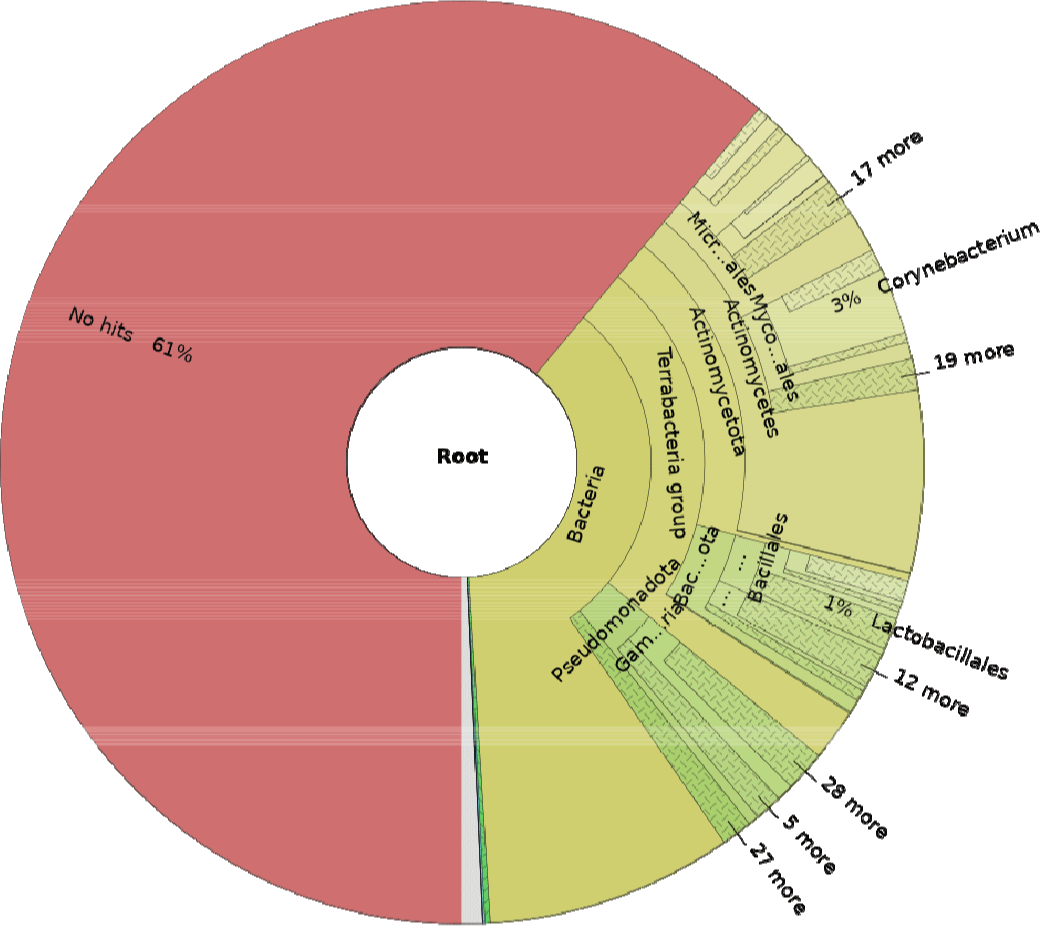
The STAR (29.4%–33.5%) and Bowtie (2.04%–3.42%) mapping rates differed notably (Table 2), likely due to ability of STAR to recognize splicing events [21]. Overall, the relatively low mapping rates suggest the substantial presence of externally derived microorganisms in porcine saliva. Classification via comparison with a diverse microbial species database identified approximately 39% of the total reads as microbes (Fig. 2), including the Corynebacterium genus, which is highly abundant in the oral microbiome [36]. Corynebacterium is a meaningful genus in the oral microbiome, particularly abundant in human saliva, where it contributes to maintaining oral health. Several studies have shown that Corynebacterium plays a role in restoring the balance of oral biofilms, suggesting its potential to promote oral health [3739]. Additionally, they have been found to secrete various fatty acids with anti-inflammatory effects [40], further supporting their beneficial roles in regulating oral health. Overall, Corynebacterium appears to be strongly associated with oral health and may actively coordinate health-promoting activities. Recently, research has also identified Corynebacterium as a predominant genus in the oral microbiome of sows, suggesting its importance in maintaining the health of the oral microbiome in pigs [41]. This finding asserts the potential of Corynebacterium in influencing the overall health and resilience of pigs, particularly in relation to oral health and immune functions. Moreover, a reciprocal interaction between miRNAs and microorganisms have been extensively studied [42]. MiRNAs can regulate immune responses, which in turn may influence the abundance of the microbiome, including the abundance of beneficial bacteria [43]. Conversely, microorganisms can also affect host miRNA expression, influencing biological processes such as inflammation and immune responses [44].

Table 2. Mapping rates of small RNA-seq data using Bowtie and STAR
Bowtie (%) STAR (%)
Landrace 2.04 29.4
Duroc 3.42 33.5
Download Excel Table
jast-67-6-1207-g2
Fig. 2. Krona plot for taxonomic abundance of salivary small RNAs in pigs.
Download Original Figure

This result demonstrates the potential of saliva as a meaningful sample in pig microbiome research. Salivary RNA and microbiome composition can be influenced by various factors, such as diet [45], sample collection timepoint and methods [46]. Therefore, these variables could be considerable in further studies to improve the accuracy and reliability of saliva samples.

CONCLUSIONS

In this study, we identified both known and novel miRNAs in porcine saliva, highlighting its potential as a valuable sample for miRNA exploration and microbiome analysis. The diverse microbial presence, including known oral microbiota, such as Corynebacterium, suggests that saliva is a promising sample for noninvasive monitoring of microbiome diversity and physiological states in pigs. However, the origin of the unmapped reads remains unclear and requires further investigation. This study lays the groundwork for future research on the diagnostic potential of miRNAs and unidentified components in porcine saliva, offering new possibilities for noninvasive health monitoring in pigs.

Competing interests

No potential conflict of interest relevant to this article was reported.

Funding sources

This work was supported by the National Research Foundation of Korea (NRF) grant funded by the Korea government (MSIT) (No. 1711196497).

Acknowledgements

This work was supported by the research grant of Kongju National University in 2022.

Availability of data and material

Sequence data has been submitted to SRA under accession numbers PRJNA1182251. Data will be made available on request.

Authors’ contributions

Conceptualization: Jeong GH, Lim KS.

Data curation: Jeong GH.

Formal analysis: Jeong GH.

Investigation: Jeong GH, Lim KS.

Writing - original draft: Jeong GH.

Writing - review & editing: Jeong GH, Lim KS.

Ethics approval and consent to participate

This article does not require IRB/IACUC approval because there are no human and animal participants.

REFERENCES

1.

Nagadia R, Pandit P, Coman WB, Cooper-White J, Punyadeera C. miRNAs in head and neck cancer revisited. Cell Oncol. 2013; 36:1-7

2.

Jung HT, Kim JS, Lee KH, Tizaoui K, Terrazzino S, Cargnin S, et al. Roles of microRNAs in inflammatory bowel disease. Int J Biol Sci. 2021; 17:2112-23

3.

Peng Y, Croce CM. The role of MicroRNAs in human cancer. Signal Transduct Target Ther. 2016; 1:15004

4.

Sohel MH. Extracellular/circulating MicroRNAs: release mechanisms, functions and challenges. Achiev Life Sci. 2016; 10:175-86

5.

Wang H, Peng R, Wang J, Qin Z, Xue L. Circulating microRNAs as potential cancer biomarkers: the advantage and disadvantage. Clin Epigenet. 2018; 10:59

6.

Reliszko ZP, Gajewski Z, Kaczmarek MM. Signs of embryo-maternal communication: miRNAs in the maternal serum of pregnant pigs. Reproduction. 2017; 154:217-28

7.

Zhong Z, Zhu X, Tang Q, Hong L, Gu Y, He Z, et al. Temporal microRNA expression profile of pig peripheral blood during postnatal development. Anim Biotechnol. 2022; 33:680-9

8.

Balakittnen J, Weeramange CE, Wallace DF, Duijf PHG, Cristino AS, Hartel G, et al. A novel saliva-based miRNA profile to diagnose and predict oral cancer. Int J Oral Sci. 2024; 16:14

9.

Lecchi C, Zamarian V, Gini C, Avanzini C, Polloni A, Nodari SR, et al. Salivary microRNAs are potential biomarkers for the accurate and precise identification of inflammatory response after tail docking and castration in piglets. J Anim Sci. 2020; 98:skaa153

10.

Zheng L, Shi L, Wu X, Hu P, Zhang B, Han X, et al. Advances in research on pig salivary analytes: a window to reveal pig health and physiological status. Animals. 2024; 14:374

11.

Song M, Bai H, Zhang P, Zhou X, Ying B. Promising applications of human-derived saliva biomarker testing in clinical diagnostics. Int J Oral Sci. 2023; 15:2

12.

Schönbacher M, Banfi C, Berghold A, Matzhold EM, Wagner T, Mayr WR, et al. Immunoglobulin class profiles of ABO antibodies in saliva and serum of healthy individuals. Transfus Med Hemother. 2022; 50:294-302

13.

Mohammed MM, Sekar P, Al Jamal J, Abu Taha L, Bachir A, Al Kawas S. Comparative analysis of salivary antimicrobial resistance genes in dental students: a PCR and questionnaire study. PLOS ONE. 2025; 20e0315450

14.

Miretti S, Lecchi C, Ceciliani F, Baratta M. MicroRNAs as biomarkers for animal health and welfare in livestock. Front Vet Sci. 2020; 7:578193

15.

Winter E, Cisilotto J, Silva AH, Rosolen D, Fabichak AP, Rode MP, et al. MicroRNAs: potential biomarkers for reproduction, diagnosis, prognosis, and therapeutic in domestic animals. Res Vet Sci. 2021; 142:117-32

16.

Forcina G, Pérez-Pardal L, Carvalheira J, Beja-Pereira A. Gut microbiome studies in livestock: achievements, challenges, and perspectives. Animals. 2022; 12:3375

17.

Simon A. FastQc: a quality control tool for high throughput sequence data. Babraham Bioinformatics, Babraham Institute. 2010.

18.

Martin M. Cutadapt removes adapter sequences from high-throughput sequencing reads. EMBnet J. 2011; 17:10-2

19.

Langmead B, Trapnell C, Pop M, Salzberg SL. Ultrafast and memory-efficient alignment of short DNA sequences to the human genome. Genome Biol. 2009; 10:R25

20.

Friedländer MR, Mackowiak SD, Li N, Chen W, Rajewsky N. miRDeep2 accurately identifies known and hundreds of novel microRNA genes in seven animal clades. Nucleic Acids Res. 2011; 40:37-52

21.

Dobin A, Davis CA, Schlesinger F, Drenkow J, Zaleski C, Jha S, et al. STAR: ultrafast universal RNA-seq aligner. Bioinformatics. 2013; 29:15-21

22.

McGeary SE, Lin KS, Shi CY, Pham TM, Bisaria N, Kelley GM, et al. The biochemical basis of microRNA targeting efficacy. Science. 2019; 366:eaav1741

23.

Sherman BT, Hao M, Qiu J, Jiao X, Baseler MW, Lane HC, et al. DAVID: a web server for functional enrichment analysis and functional annotation of gene lists (2021 update). Nucleic Acids Res. 2022; 50:W216-21

24.

Tang D, Chen M, Huang X, Zhang G, Zeng L, Zhang G, et al. SRplot: a free online platform for data visualization and graphing. PLOS ONE. 2023; 18e0294236

25.

Wood DE, Lu J, Langmead B. Improved metagenomic analysis with Kraken 2. Genome Biol. 2019; 20:257

26.

Ondov BD, Bergman NH, Phillippy AM. Interactive metagenomic visualization in a web browser. BMC Bioinform. 2011; 12:385

27.

Griffiths-Jones S, Saini HK, van Dongen S, Enright AJ. miRBase: tools for microRNA genomics. Nucleic Acids Res. 2008; 36:D154-8

28.

Fu Y, Fan P, Wang L, Shu Z, Zhu S, Feng S, et al. Improvement, identification, and target prediction for miRNAs in the porcine genome by using massive, public high-throughput sequencing data. J Anim Sci. 2021; 99:skab018

29.

Dignam JD, Lebovitz RM, Roeder RG. Accurate transcription initiation by RNA polymerase II in a soluble extract from isolated mammalian nuclei. Nucleic Acids Res. 1983; 11:1475-89

30.

Breving K, Esquela-Kerscher A. The complexities of microRNA regulation: mirandering around the rules. Int J Biochem Cell Biol. 2010; 42:1316-29

31.

Valastyan S, Weinberg RA. Roles for microRNAs in the regulation of cell adhesion molecules. J Cell Sci. 2011; 124:999-1006

32.

Zhao Y, Jaber VR, LeBeauf A, Sharfman NM, Lukiw WJ. microRNA-34a (miRNA-34a) mediated down-regulation of the post-synaptic cytoskeletal element SHANK3 in sporadic Alzheimer’s disease (AD). Front Neurol. 2019; 10:28

33.

Ljepoja B, Schreiber C, Gegenfurtner FA, García-Roman J, Köhler B, Zahler S, et al. Inducible microRNA-200c decreases motility of breast cancer cells and reduces filamin A. PLOS ONE. 2019; 14e0224314

34.

Abbott LC, Nigussie F. Adult neurogenesis in the mammalian dentate gyrus. Anat Histol Embryol. 2020; 49:3-16

35.

Yang BN, Zhang CT, Liu LF, Wu XL, Hu HB, Chen Y, et al. Identification of microRNA/target gene in the dentate gyrus of 7-day-old mice following isoflurane exposure. Acta Neurobiol Exp. 2022; 82:96-105

36.

Mark Welch JL, Rossetti BJ, Rieken CW, Dewhirst FE, Borisy GG. Biogeography of a human oral microbiome at the micron scale. Proc Natl Acad Sci USA. 2016; 113:E791-800

37.

Kim JH, Bang IH, Noh YJ, Kim DK, Bae EJ, Hwang IH. Metabolites produced by the oral commensal bacterium Corynebacterium durum extend the lifespan of Caenorhabditis elegans via SIR-2.1 overexpression. Int J Mol Sci. 2020; 21:2212

38.

Tian J, Zhao B, Wang J, Du W, Ma W, Xia B, et al. The short-term impact of comprehensive caries treatment on the supragingival microbiome of severe early childhood caries. Int J Paediatr Dent. 2024; 34:505-15

39.

Kim S, Lee M, Kim NY, Kwon YS, Nam GS, Lee K, et al. Oxidative tryptamine dimers from Corynebacterium durum directly target survivin to induce AIF-mediated apoptosis in cancer cells. Biomed Pharmacother. 2024; 173:116335

40.

Treerat P, Redanz U, Redanz S, Giacaman RA, Merritt J, Kreth J. Synergism between Corynebacterium and Streptococcus sanguinis reveals new interactions between oral commensals. ISME J. 2020; 14:1154-69

41.

Hattab J, Marruchella G, Pallavicini A, Gionechetti F, Mosca F, Trachtman AR, et al. Insights into the oral bacterial microbiota of sows. Microorganisms. 2021; 9:2314

42.

Li M, Chen WD, Wang YD. The roles of the gut microbiota–miRNA interaction in the host pathophysiology. Mol Med. 2020; 26:101

43.

Liu S, da Cunha AP, Rezende RM, Cialic R, Wei Z, Bry L, et al. The host shapes the gut microbiota via fecal MicroRNA. Cell Host Microbe. 2016; 19:32-43

44.

Hu S, Liu L, Chang EB, Wang JY, Raufman JP. Butyrate inhibits pro-proliferative miR-92a by diminishing c-Myc-induced miR-17-92a cluster transcription in human colon cancer cells. Mol Cancer. 2015; 14:180

45.

Viljakainen J, Raju SC, Viljakainen H, de Oliveira Figueiredo RA, Roos E, Weiderpass E, et al. Meal regularity plays a role in shaping the saliva microbiota. Front Microbiol. 2020; 11:757

46.

Sullivan R, Heavey S, Graham DG, Wellman R, Khan S, Thrumurthy S, et al. An optimised saliva collection method to produce high-yield, high-quality RNA for translational research. PLOS One. 2020; 15e0229791