INTRODUCTION
Feed efficiency is a key determinant of both profitability and environmental sustainability in beef cattle production [1]. Residual feed intake (RFI), defined as the difference between an animal’s actual feed intake and its expected intake based on growth and body weight (BW) [2], is widely accepted as a measure of feed efficiency. Cattle with low RFI consume less feed than expected for their level of production and are therefore considered more efficient, whereas those with high RFI are regarded as less efficient. Therefore, improving feed efficiency is of great interest to the beef industry, as it not only lowers production costs but also reduces nutrient excretion in manure [3]. Improved feed efficiency also helps mitigate methane emissions from ruminants [4]. Therefore, it is important to identify the biological factors associated with RFI.
The diverse microbiota in the gastrointestinal tract, including the rumen and intestines, significantly influences host nutrient metabolism, health, and productivity [5,6]. Recent investigations have examined the role of gastrointestinal microbiota in cattle feed efficiency [5], predominantly focusing on the rumen microbiota [7–10]. In contrast, research examining the relationship between intestinal microbiota and feed efficiency remains relatively scarce, despite the bovine fecal microbiota potentially affecting animal health and food safety [11,12]. The intestinal microbiota differs markedly from the rumen microbiota in cattle [13–15]. Research on the intestinal microbiota may provide new insights into its role in influencing feed efficiency. Indeed, a few previous studies in Angus cattle suggest that certain fecal microbes may serve as biomarkers for predicting feed efficiency [16–18]; however, it remains unclear whether these findings are consistent across cattle breeds.
Hanwoo cattle, a native beef breed in Korea, represent the majority of the national beef cattle population [19], with a population exceeding 3 million [20]. Increasing evidence indicates that the gastrointestinal microbiota differs among cattle breeds [7,21], suggesting that breed-specific analyses are required to understand the relationship between microbiota and feed efficiency. Despite this, limited research has examined the associations between intestinal microbiota and feed efficiency in Hanwoo cattle, particularly during the early fattening stage when substantial physiological and dietary changes occur. This study investigated how divergent RFI influences the fecal microbiota of Hanwoo steers during the early fattening stage. By comparing the diversity, structure, and predicted functions of the fecal microbiota, this study aimed to identify specific microbial taxa and functions potentially associated with host feed efficiency. The findings may enhance understanding of host–microbiome interactions and support the development of microbiome-informed strategies to improve feed efficiency in beef cattle.
MATERIALS AND METHODS
In total, 63 Hanwoo steers, all 9 months old, were randomly assigned to individual pens (16 m2 per head) and kept under identical dietary and environmental conditions at a single farm for five months, with free access to clean drinking water. Then, they were fed a total mixed ration (TMR) ad libitum once daily from 14 to 16 months of age (for a total duration of 2 months) in the morning. The ingredients and chemical composition of the TMR diet are detailed in Table 1. Weights were recorded at the start (14 months) and end of the feeding trial. Dry matter intake (DMI) was manually measured and averaged weekly for each animal. RFI was calculated as the difference between recorded DMI and predicted DMI based on metabolic BW and average daily gain (ADG) [22]. Steers with RFI values below –0.4 were classified as low-RFI (efficient), whereas those with RFI values above 0.4 were categorized as high-RFI (inefficient). These RFI thresholds identified the top and bottom 10% of steers as extreme phenotypes to maximize their biological distinction between RFI groups, as previously described [23]. A total of 11 animals representing the extreme RFI phenotypes were selected for further analysis, comprising the high-RFI (n = 5) and low-RFI (n = 6) groups. Fresh fecal samples were collected from the 11 selected animals using a fecal grab method [24] and immediately stored at –80°C prior to DNA extraction.
Metagenomic DNA was extracted from each fecal sample using the repeated bead beating plus column (RBB + C) method with the QIAamp Fast DNA Stool Mini Kit (Qiagen) [25]. Individual amplicon sequencing libraries were prepared by PCR amplification of the V3–V4 regions of bacterial 16S rRNA genes using universal primers 341F (5’-CCTACGGGNGGCWGCAG-3’) and 805R (5’-GACTACHVGGGTATCTAATCC-3’) [26]. The amplicon libraries were subjected to paired-end (2 × 300 bp) sequencing on the Illumina MiSeq platform (Illumina) at Macrogen. The resulting 16S rRNA sequencing data were analyzed using QIIME2 (version 2023.5) [27]. Initial quality filtering and denoising were performed using the DADA2 pipeline [28], where reads with a quality score below 20 were discarded, paired-end sequences were merged, and chimeric sequences were removed to obtain high-resolution amplicon sequence variants (ASVs). Representative sequences of individual ASVs were taxonomically assigned using a naïve Bayes classifier trained on the SILVA138 database (99% identity clustering) [29]. ASVs identified as unassigned sequences, chloroplasts, or mitochondria were subsequently filtered out prior to downstream analysis. Microbiome data analysis was performed using the web-based MicrobiomeAnalyst platform, including taxonomic profiling, alpha and beta diversity analyses, differential abundance analysis, and functional prediction [30]. Alpha diversity metrics—including observed ASVs; Chao1 and ACE richness estimates; and Shannon, Simpson, and Fisher’s alpha diversity indices—were computed. Beta diversity analysis was performed to compare the overall fecal microbiota composition between the two RFI groups using principal coordinates analysis based on both unweighted and weighted UniFrac distance. Functional prediction was performed using Phylogenetic Investigation of Communities by Reconstruction of Unobserved States 2 (PICRUSt2, v2.3.0) to predict metabolic pathways and functional genes based on the 16S rRNA gene data [31], with annotations based on the Kyoto Encyclopedia of Genes and Genomes database [32].
Comparative analyses of growth performance parameters (BW, ADG, DMI, and RFI) between the two RFI groups were conducted using two-sample Student’s t-tests, implemented in R software (version 4.1.2; R Core Team). Amplicon sequence counts were standardized using total-sum scaling within the MicrobiomeAnalyst platform to adjust for differences in sequencing depth across samples. Alpha diversity metrics were assessed using the Mann–Whitney U test, while beta diversity differences were evaluated through permutational multivariate analysis of variance (PERMANOVA) with 999 permutations [33]. Differentially abundant taxa were identified using linear discriminant analysis effect size (LEfSe), focusing on taxa with relative abundances exceeding 0.1% at both the phylum and genus levels [34]. LEfSe was also used to identify differentially abundant metabolic pathways predicted by PICRUSt2. Taxa and functions were considered significantly differentially abundant with p < 0.05 in the Mann-Whitney U test, alongside a linear discriminant analysis (LDA) score > 3.0.
RESULTS AND DISCUSSION
The growth performance of Hanwoo steers is summarized in Table 2. DMI and RFI were significantly higher in the high-RFI group than in the low-RFI group (p < 0.05), whereas initial BW at 14 months, final BW at 16 months, and ADG did not differ significantly between the two RFI groups (p > 0.05). These findings indicate that more feed-efficient Hanwoo steers can achieve similar weight gains while consuming less feed, thereby reducing feed costs. Similar results have been reported in Angus cattle [17,18] and Hanwoo steers during the late fattening stage [23].
At the phylum level, Firmicutes emerged as the most dominant, comprising 70.5% of the total sequences across both high- and low-RFI groups (Fig. 1A). The second most predominant phylum was Bacteroidota, accounting for 25.4%, followed by Verrucomicrobiota (1.4%), Spirochaetota (0.7%), Patescibacteria (0.6%), Actinobacteriota (0.5%), Cyanobacteria (0.3%), Proteobacteria (0.2%), Desulfobacterota (0.1%), and Euryarchaeota (0.1%; Fig. 1A). The remaining phyla were grouped as “Others,” which accounted for only 0.1% of the total sequences (Fig. 1A). No significant differences in relative abundance were observed between the high- and low-RFI groups for these phyla (p > 0.05). The predominance of Firmicutes and Bacteroidota in cattle feces has also been reported in other breeds [11,35], indicating that these phyla are core members of the bovine fecal microbiota and play key roles in overall nutrient metabolism, regardless of breed.
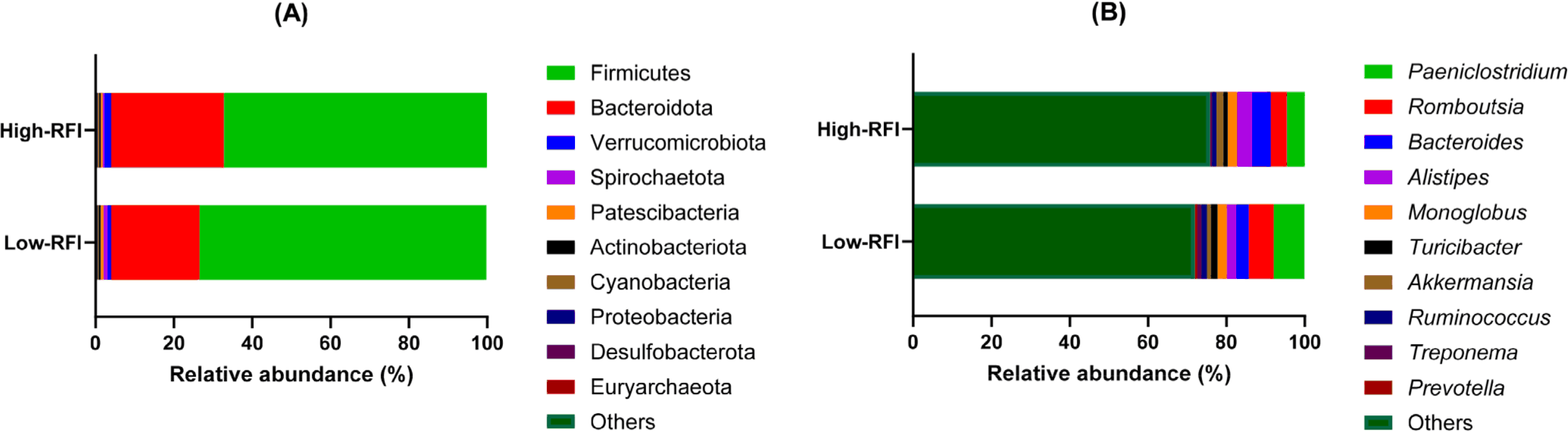
Among the known genera, Paeniclostridium was the most abundant, representing 6.4% of the total sequences across both RFI groups (Fig. 1B). Romboutsia ranked as the second most dominant genus (5.4%), while Bacteroides (3.9%), Alistipes (3.0%), Monoglobus (2.4%), Turicibacter (1.4%), Akkermansia (1.4%), Ruminococcus (1.3%), Treponema (0.7%), and Prevotella (0.4%) also contributed to shaping the overall microbial profile (Fig. 1B). The remaining genera, including both classified and unclassified groups, were grouped as “Others,” collectively accounting for 73.7% of the total sequences (Fig. 1B).
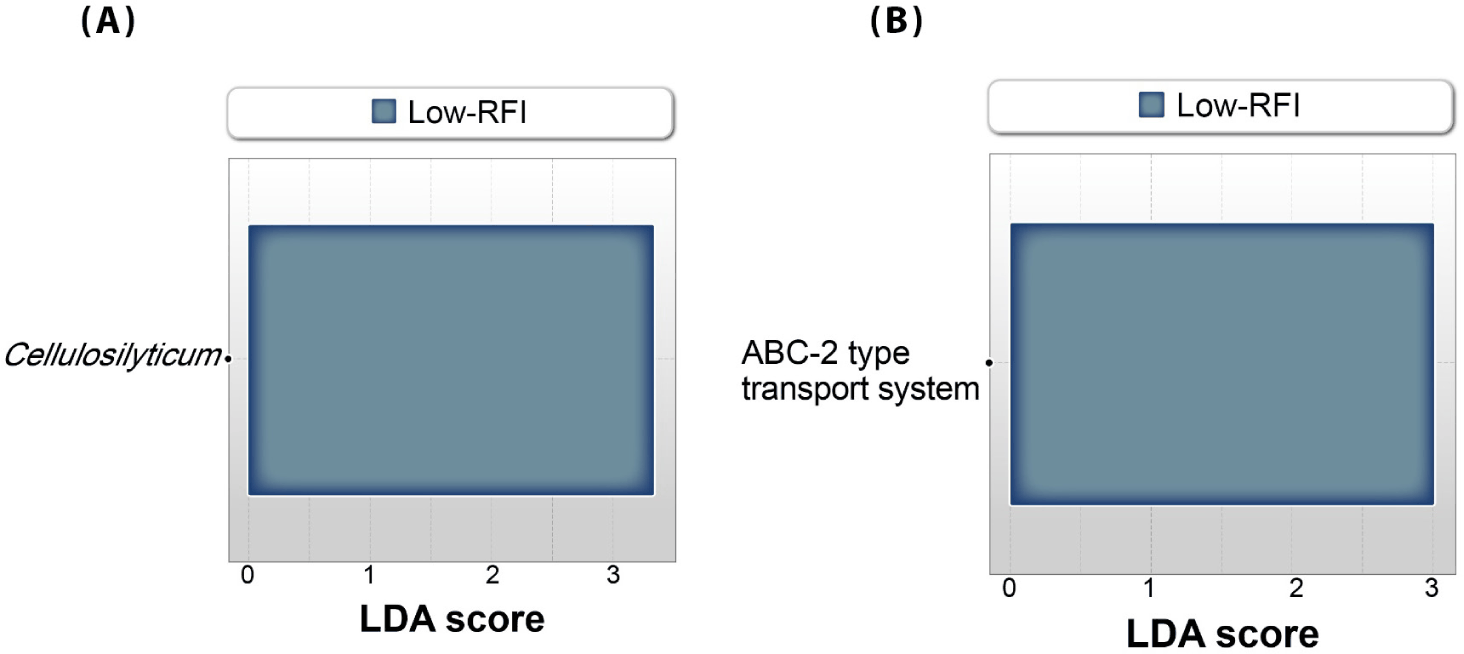
Among the known genera, only Cellulosilyticum exhibited a significantly higher abundance in the low-RFI group (p < 0.05; Fig. 2A). Members of Cellulosilyticum, such as Cellulosilyticum ruminicola isolated from the rumen of yak, are known to degrade cellulose into short-chain fatty acids, primarily acetate [36]. Cellulosilyticum has also been detected in cattle feces and reported to be more prevalent in healthy cattle [37,38], suggesting that it may be a stable member of the hindgut microbiota. Substantial quantities of dietary cellulose typically escape ruminal degradation and reach the hindgut [39]. In this study, the higher abundance of Cellulosilyticum in more efficient steers suggests that this genus may be associated with the further degradation of undigested cellulose in the hindgut. This additional cellulose fermentation may be associated with increased acetate production, which may, in part, contribute to host energy metabolism and feed efficiency. Although a direct association between Cellulosilyticum and feed efficiency has not been previously reported, this finding aligns with previous reports showing a greater abundance of cellulolytic bacteria, such as members of the Ruminococcaceae family, in the feces of efficient cattle [18]. This functional similarity suggests that fiber-degrading microbial taxa may contribute to improved feed efficiency by enhancing energy extraction from undigested substrates. The inconsistent detection of Cellulosilyticum across studies may be associated with differences in diet, breed, and environmental conditions, all of which are known to influence the fecal microbiota in cattle. Moreover, prior studies have demonstrated that the composition of bovine fecal microbiota is partially heritable [40,41], implying that host genetics may influence the abundance of specific microbial taxa. Consequently, the significant presence of Cellulosilyticum in the low-RFI group may be driven, at least in part, by host genetic factors. Future research should explore ways to integrate fecal microbial characteristics into selective breeding programs to further enhance feed efficiency in beef cattle.
In a prior investigation of Hanwoo steers during the late fattening stage, sugar-fermenting genera such as Kandleria and Acetitomaculum were found to be enriched in inefficient steers [23]. This enrichment likely resulted from an increased availability of undigested feed residues in the hindgut, attributed to reduced ruminal digestibility [23]. Conversely, the present study observed no significant differences in these genera between low- and high-RFI groups during the early fattening stage. Likewise, Cellulosilyticum, which was enriched in efficient steers during the early fattening stage, did not exhibit any significant difference in relative abundance between low- and high-RFI groups in the late fattening stage. This discrepancy may be associated with differences in the forage-to-concentrate ratio across growth stages. Cattle in the early fattening stage typically receive diets with a higher forage-to-concentrate ratio than late-fattening cattle. In the present study, the forage-to-concentrate ratio was higher than that reported in the previous late fattening study [23]. The increased forage provision may be associated with the abundance of Cellulosilyticum, which can further degrade cellulose residues that escape ruminal digestion in the hindgut, thereby allowing greater energy extraction from cellulose residues reaching the hindgut, as previously described [18]. In contrast, Kandleria and Acetitomaculum, which primarily ferment soluble sugars, may not be enriched owing to the lower availability of concentrate-derived carbohydrate residues during the early fattening stage.
Additionally, stage-specific differences in the fecal microbiota between RFI groups may stem from variations in DMI and digesta passage rate. In cattle, increased DMI correlates with faster passage rates, predominantly driven by accumulating body weight [42]. During the early fattening stage, the relatively lower DMI and slower passage rates likely reduce the quantity of fermentable sugars reaching the hindgut relative to the late fattening stage, resulting in minimal differences in sugar-fermenting taxa between RFI groups. Under these circumstances, efficient steers may utilize residual cellulose more effectively, leading to a higher abundance of Cellulosilyticum. Conversely, during the late fattening stage, increased DMI and faster passage rates may be associated with increased flow of undigested carbohydrates to the hindgut in inefficient steers, promoting the enrichment of sugar-fermenting taxa, while differences in cellulose-degrading taxa are diminished. However, because the high-RFI group exhibited significantly higher DMI, more substrates might have reached the hindgut in inefficient steers. Nevertheless, the higher abundance of Cellulosilyticum in the low-RFI group suggests that fecal microbial composition may not be explained solely by substrate supply but may also be associated with differences in hindgut substrate utilization and host digestive efficiency. Therefore, the observed patterns may reflect the combined effects of feed intake, digesta passage, and microbial utilization of residual substrates rather than a single factor. Because hindgut fermentation characteristics were not directly measured in this study, this interpretation should be considered with caution.
Within the unclassified groups, UCG-005 (10.7%), Rikenellaceae_RC9_gut_group (7.5%), and Christensenellaceae_R-7_group (5.2%) were the predominant putative genera commonly detected in ruminants [43]. Nonetheless, no significant differences were observed in these genera between the high- and low-RFI groups. Members of these genera have been reported to positively correlate with volatile fatty acid production [43,44]. Further research is necessary to elucidate their potential contributions to host nutrition.
All alpha-diversity metrics, including observed ASVs, and the Chao1, ACE, Shannon, Simpson, and Fisher indices showed no significant differences between the high- and low-RFI groups (p > 0.05), indicating similar microbial richness and evenness in both groups (Table 3). This finding suggests that feed efficiency may not be strongly associated with fecal microbial diversity. Similar results have been reported in Angus cattle at both 9 and 13 months of age [18], as well as in Hanwoo steers during the late fattening stage [23]. In contrast, other studies have documented greater microbial diversity in efficient cattle than in inefficient ones [17,35]. These discrepancies may arise from various confounding factors, such as breed, diet composition, age, and management practices, which all affect fecal microbial communities. Consequently, associations between fecal microbiota and feed efficiency identified in one breed may not be directly applicable to others.
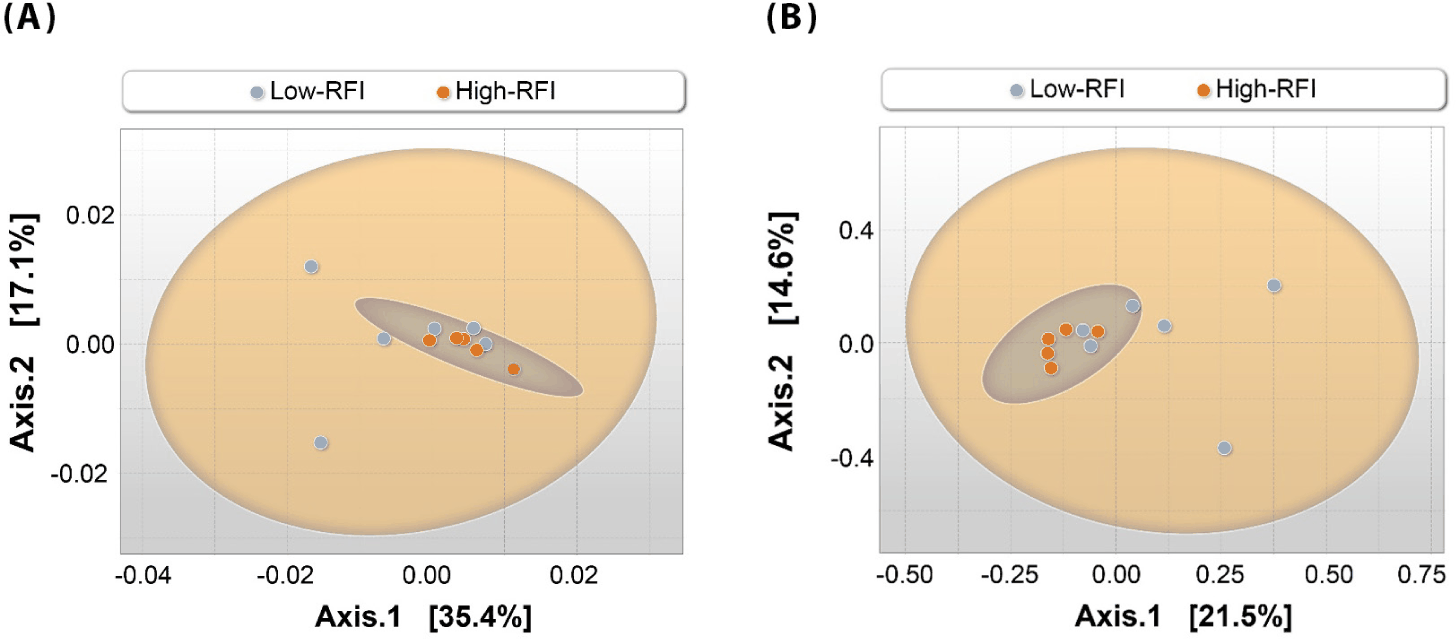
The weighted UniFrac-based principal coordinates analysis plot revealed no significant differences in fecal microbiota between the high- and low-RFI groups, indicating that the dominant taxa contributing most to relative abundance are generally similar across the two groups (Fig. 3A). Conversely, unweighted UniFrac analysis demonstrated a significant difference (p < 0.05; Fig. 3B), suggesting that the observed differences were principally driven by low-abundance taxa rather than transitions in dominant taxa. Collectively, these results imply that variations in feed efficiency may be more closely associated with the functional roles of specific microbial taxa than by the overall composition of dominant taxa.
Based on PICRUSt2-inferred functional profiles, the ATP-binding cassette (ABC)-2 type transport system (M00254) was enriched in the fecal microbiota of the low-RFI group relative to the high-RFI group (Fig. 2B). ABC transporters are instrumental in the uptake of diverse substrates, including carbohydrates, peptides, and lipids, thereby enhancing nutrient absorption and metabolism [45]. Therefore, the enrichment of ABC transporters suggests that the fecal microbiota in efficient steers is likely more effective in nutrient utilization, thereby providing more fermentation products to the host animal. This predicted functional characteristic may partially contribute to the enhanced feed efficiency observed in efficient steers.
The present study evaluated fecal microbiota only at the end of the feeding trial, without sampling at the beginning of the experiment. This may not fully capture the temporal dynamics of fecal microbial communities during RFI phenotype development. Therefore, it remains unclear whether the observed differences in fecal microbiota between high- and low-RFI groups were pre-existing or developed during the experimental period. However, all animals were maintained on the same diet from 9 months of age prior to the experiment and throughout the study, thereby minimizing dietary effects known to strongly influence fecal microbial composition [11]. Accordingly, the present findings should be regarded as associative rather than causal, and future studies incorporating longitudinal sampling at the beginning and multiple time points of feeding trials are warranted to better understand temporal changes in microbial composition associated with RFI.
In conclusion, dominant taxa and overall microbial diversity did not differ between high- and low-RFI Hanwoo steers. Instead, feed efficiency in these steers was associated with the genus Cellulosilyticum, which potentially enhances hindgut cellulose degradation and nutrient utilization. Beta diversity analysis further revealed that specific taxa rather than dominant taxa primarily influenced variation in fecal microbiota structure. Collectively, these findings suggest that the functional roles of specific fecal microbes, rather than overall microbial composition, may be crucial in modulating feed efficiency in cattle, highlighting their potential as microbial biomarkers for feed efficiency and as targets for microbiome-based breeding or nutritional strategies. However, these results should be interpreted with caution due to the relatively small sample size, and further studies with larger cohorts are required to validate these observations.